
June 25, 2026
Why Hoisting & Rigging Safety Can Make or Break Your Operation
Hoisting & rigging operations are at the center of some of the most high-risk work that happens inside heavy manufacturing facilities — and when something goes wrong, the consequences are severe.
A dropped load. A tipped crane. A failed sling. These aren’t hypotheticals. On November 14, 1992, a strap failed while lifting a tank, critically injuring a worker who died five days later. In a separate incident, a 22-ton concrete shielding block fell 25 feet, causing over $400,000 in damage — all because of improper eyebolt thread engagement.
For plant managers in food, chemical, and power industries, the stakes are even higher. Unplanned downtime, equipment damage, and worker injuries don’t just cost money — they shut down production lines and expose your facility to serious regulatory liability.
Here’s a quick overview of what hoisting and rigging involves:
| Term | What It Means |
|---|---|
| Hoisting | The mechanical lifting of a load using equipment like cranes or hoists |
| Rigging | The system of slings, hardware, and attachments that connects the load to the hoist |
| WLL (Working Load Limit) | The maximum load a piece of equipment is rated to handle safely |
| Critical Lift | A lift that requires additional planning and engineering oversight due to elevated risk |
| Qualified Rigger | A trained, certified person responsible for rigging inspection and configuration |
The global hoists market is on track to reach $2.558 billion in 2026, reflecting how central these operations are across industries. Yet accidents continue — almost always due to the same preventable causes: overloading, poor planning, inadequate inspection, and undertrained personnel.
This guide covers everything you need to know to execute safe, compliant, and efficient lifting operations — from equipment selection and load assessment to inspection standards and critical lift planning.
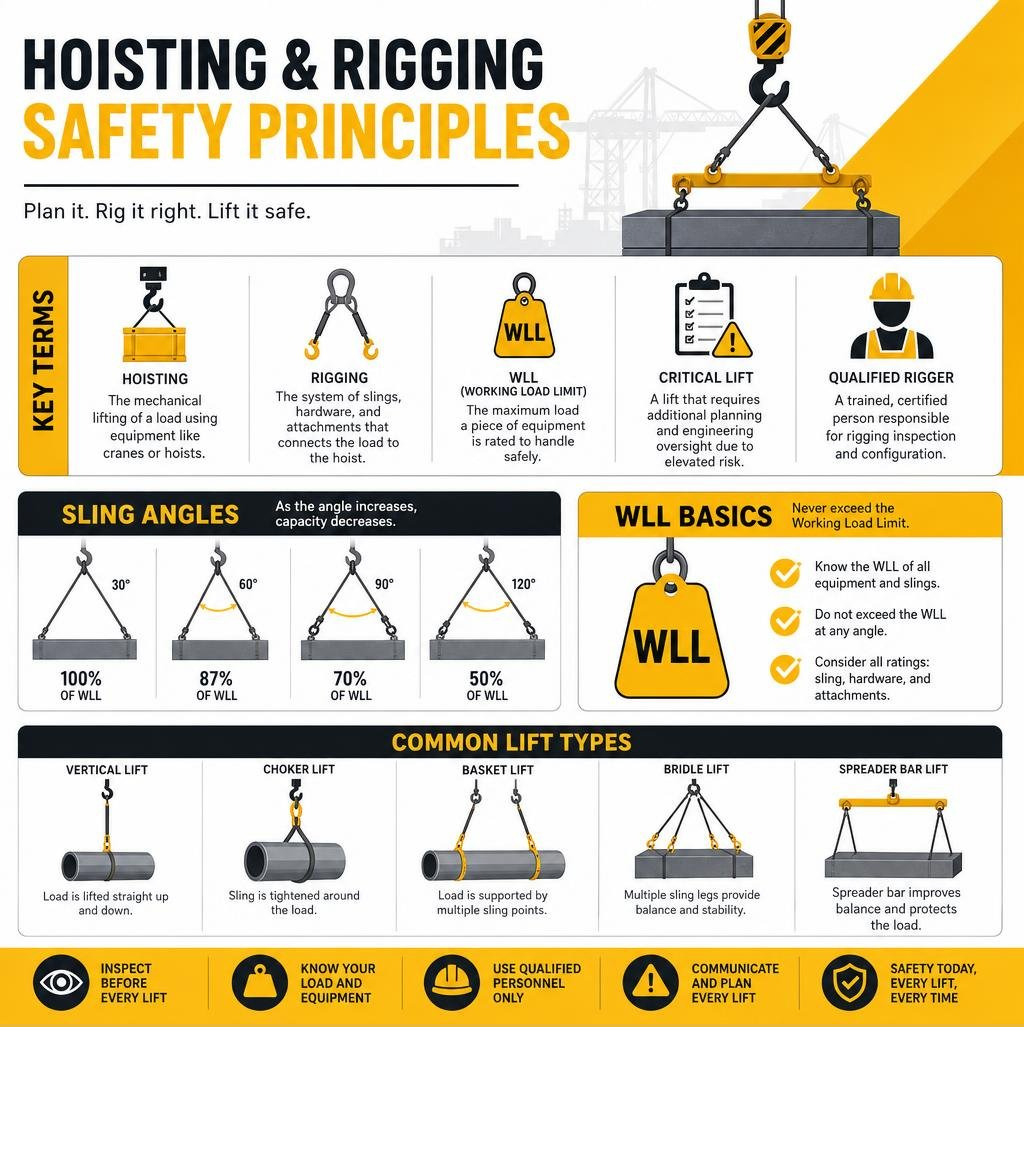
Hoisting & rigging terms made easy:
Understanding Hoisting & Rigging Fundamentals
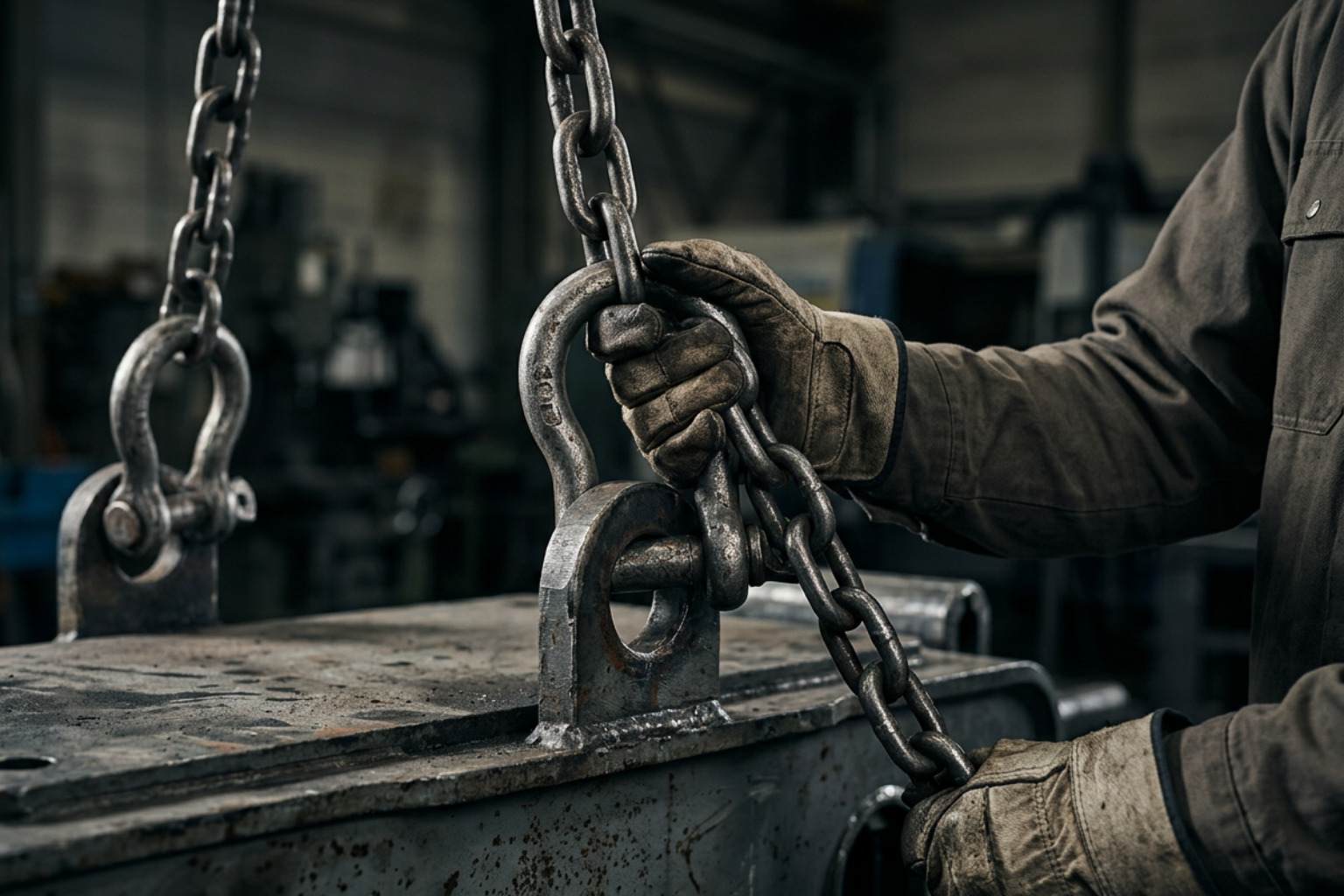
While often grouped together, hoisting and rigging are two distinct disciplines that must work in perfect harmony to execute a safe lift.
Hoisting is the vertical lifting or lowering of a load. It relies on mechanical power and devices like overhead cranes, gantry cranes, and electric or manual hoists to overcome gravity.
Rigging is the art and science of securing the load to the hoisting equipment. It involves selecting the right slings, shackles, hooks, and spreader bars to ensure the load remains stable, balanced, and secure throughout its entire path of travel.
To understand how these systems work, you can read our breakdown of What is Rigging Service?
The primary goal of any hoisting & rigging configuration is absolute load control. This is achieved by utilizing mechanical advantage — using pulleys, gears, and lever systems to multiply force. However, mechanical advantage is useless if the physical connection between the hoist and the load is compromised.
If the rigging setup fails to account for the load’s center of gravity, the object will tilt or swing the moment it leaves the ground, creating massive side-loading forces that can tip cranes or snap rigging hardware.
Key Components of a Safe Lifting System
A safe lifting system is only as strong as its weakest link. Every component — from the structural crane runway down to a single cotter pin in a shackle — must be engineered, rated, and maintained to handle the stresses of the lift.
When configuring a system, engineers apply a strict factor of safety. For standard rigging hardware, this factor of safety is typically 4 to 6. This means if a shackle has a Minimum Breaking Strength (MBS) of 100,000 pounds, its Working Load Limit (WLL) will be rated at 20,000 pounds (using a safety factor of 5).
For specialized operations like multiple lift rigging in steel erection, OSHA requires a strict 5:1 safety factor for all components. You can read more about these structural configurations in our A Quick Start Guide to Safe Rigging and Lifting.
Essential Hoisting & Rigging Equipment
Executing a lift in complex industrial environments requires a variety of heavy equipment and specialized connections. This hardware is categorized into primary lifting machines and the connectors that secure the load.
- Cranes: Mobile, crawler, tower, or overhead gantry cranes provide the primary mechanical lifting power.
- Hoists: Drum-style or chain hoists (either electric, pneumatic, or manual) control vertical travel.
- Slings: The flexible links that wrap around or attach directly to the load.
- Shackles: The primary connecting link used to join slings, hooks, and lifting eyes. Never replace a shackle pin with a standard bolt, as bolts are not rated for the multi-directional stresses of a lift.
Choosing the right sling material is one of the most critical decisions a rigger makes. Below is a comparison of the four primary sling types used in industrial settings:
| Sling Type | Advantages | Disadvantages / Hazards | Best Applications |
|---|---|---|---|
| Wire Rope (e.g., 6×19 IWRC) | Excellent strength-to-weight ratio; highly fatigue resistant; predictable wear patterns. | Susceptible to kinking, birdcaging, and internal corrosion. | General heavy lifting, construction, steel erection. |
| Synthetic Web (Nylon/Polyester) | Lightweight; highly flexible; will not scratch or damage polished load surfaces. | Easily cut by sharp corners; highly sensitive to heat (max 180°F) and UV damage. | Delicate machinery, finished products, chemical tanks. |
| Alloy Steel Chain (Grade 80/100) | Extremely rugged; resistant to abrasion and high heat; highly durable. | Very heavy; prone to sudden failure if a single link is damaged or cracked. | Foundries, steel mills, heavy rigging in harsh environments. |
| Metal Mesh | High resistance to heat and abrasion; wide load-bearing surface prevents slipping. | Low flexibility; expensive; difficult to inspect for internal weld failures. | Hot metal handling, structural steel plates, pipes. |
Below-the-Hook Hoisting & Rigging Hardware
Below-the-hook hardware refers to the mechanical devices used to adapt the crane hook to the specific geometry of the load. This includes eyebolts, master links, turnbuckles, and spreader bars.
When utilizing this hardware, riggers must strictly adhere to the manufacturer’s installation guidelines:
- Eyebolts: Must be fully threaded with a minimum thread engagement of 1.5 times the bolt diameter. The shoulder of the eyebolt must sit perfectly flush with the mating surface. Angular loading on eyebolts reduces their capacity dramatically — loading below a 45-degree angle is strictly prohibited.
- Spreader Beams: Essential for lifting loads longer than 12 feet. They convert bending stress into compressive stress, preventing the slings from crushing the load or slipping inward.
- The D/d Ratio: This represents the ratio of the curvature diameter of the rigging hardware (D) to the nominal diameter of the wire rope sling (d). If a wire rope is bent too sharply around a small shackle or hook, its efficiency drops by up to 50%, leading to premature fatigue and failure.
- Sling Angles: As the angle between the sling leg and the horizontal plane decreases, the tension on each sling leg increases exponentially. A sling angle below 45 degrees should be avoided, and anything below 30 degrees is extremely dangerous.
Riggers must follow the federal safety mandates laid out in the OSHA 1926.753 Hoisting and Rigging Standard to ensure compliance and avoid severe regulatory fines. For specialized regional projects, consulting qualified rigging engineers can help ensure equipment meets regional safety parameters.
The Step-by-Step Process for Safe Load Assessment
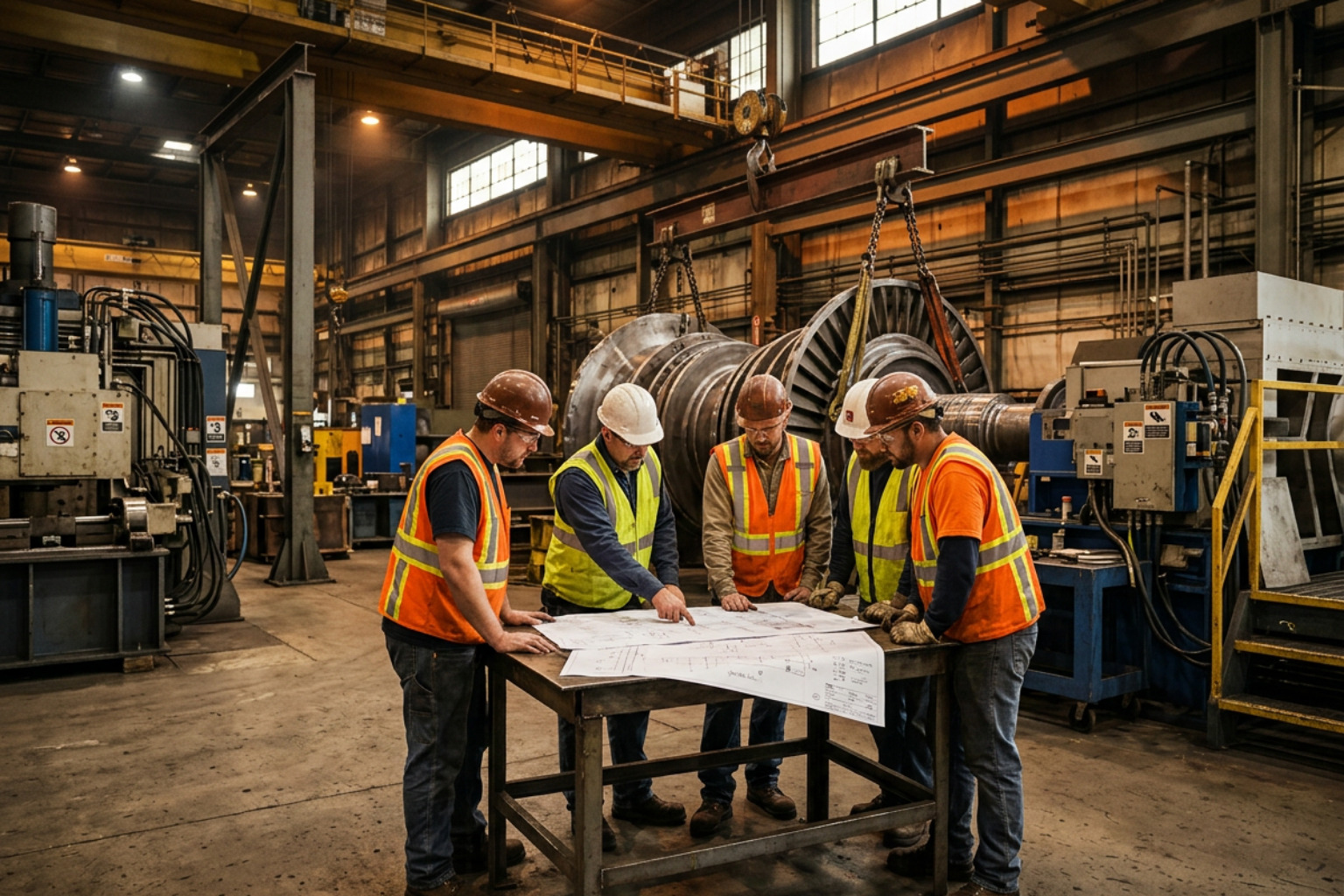
Before a single crane control is touched, a rigorous load assessment must occur. Guessing the weight of an industrial asset is one of the most common causes of catastrophic crane tips and rigging failures.
To prevent these incidents, follow this systematic process:
- Determine the Exact Weight: Retrieve the weight from shipping documents, manufacturer design plans, or physical scale weights. If unavailable, calculate the weight mathematically. For example, steel plates weigh approximately 40 pounds per square foot per inch of thickness.
- Locate the Center of Gravity (CG): The crane hook must be positioned directly above the load’s CG before the lift begins. If the hook is off-center, the load will swing violently when lifted, creating side-loads that can tip the crane.
- Inspect Ground Conditions: On May 30, 1997, a 30-ton mobile hydraulic crane tipped because of poor ground conditions and incorrect outrigger setup during a lift. Always ensure the ground can support the combined weight of the crane, rigging, and load. Use outrigger pads or cribbing to distribute the pressure safely.
- Conduct a Test Lift: Lift the load just 2 to 3 inches off the ground and hold it. This allows the rigger to verify the balance, check that the brakes hold, and ensure the rigging doesn’t slip or shift.
To ensure your plant is ready for this process, review our guide on How to Prepare Your Facility for a Rigging or Machinery Moving Project.
Common Mistakes and Hazards in Lifting Operations
Even with the best planning, human error can introduce severe hazards to a job site. Understanding these common pitfalls is the first step toward eliminating them:
- Overloading Equipment: Exceeding the WLL of slings or hardware. Sling angles and chokes reduce rated capacity (a choker hitch drops capacity significantly when the choke angle is less than 120 degrees).
- Ignoring Environmental Conditions: High winds, heavy rain, and lightning are immediate grounds for suspending lift operations. Wind acts as a sail on large-surface-area loads, easily overpowering crane control systems.
- Poor Communication: Noise-heavy industrial plants make verbal communication impossible. Operating without dedicated radios, whistles, or standard hand signals leads to delayed reactions and dropped loads.
- Working Under Suspended Loads: No worker should ever stand or walk under a live load. Use tag lines to control load rotation from a safe distance.
- Lack of Formal Training: Allowing uncertified personnel to rig loads or operate hoists.
For a comprehensive list of safety protocols to share with your team, check out our Heavy Equipment Moving Safety Tips.
Frequently Asked Questions
What are the training requirements for riggers?
Riggers must be qualified and certified through a program that includes both comprehensive written exams and practical, hands-on demonstrations. Under OSHA standards, this certification is valid for a three-year cycle, after which the rigger must be re-evaluated to maintain their status.
How often should rigging hardware be inspected?
Rigging hardware must undergo three levels of inspection:
- Pre-Shift Inspection: A visual check performed by a qualified rigger before every single shift.
- Frequent Inspection: A documented visual inspection conducted monthly or quarterly depending on service intensity.
- Periodic Inspection: A detailed, documented annual inspection. Any hardware showing cracks, gouges, deformation, or more than 10% wear on any dimension must be destroyed and discarded immediately.
What is the minimum safe sling angle?
The minimum recommended sling angle is 45 degrees, though greater than 60 degrees is highly preferred. Lifting at angles below 30 degrees is extremely hazardous because the tension force on the sling legs can easily exceed the actual weight of the load itself.
Partnering with Professionals for Safe Execution
Executing complex hoisting & rigging projects inside operational plants requires specialized engineering, heavy equipment, and a safety-first culture. For facilities throughout Massachusetts, New Hampshire, Maine, Rhode Island, and Vermont, partnering with a proven industrial contractor is the most effective way to eliminate risk and avoid costly project delays.
Atlantic Millwrights provides expert industrial contracting and custom fabrication. Specializing in the rigging, installation, repair, and retrofitting of complex mechanical systems, they serve heavy manufacturing sectors including food/beverage, paper/pulp, and power generation.
Atlantic Millwrights operates with a clear focus on minimizing downtime, delivering projects on-time and under-budget, and maintaining an accident-free work environment.
If you are planning an upcoming machinery move, plant relocation, or heavy equipment installation, protect your personnel and assets by partnering with New England’s trusted rigging experts. Explore our specialized Rigging Services today to discuss your next project.