
August 4, 2026
The Trade Keeping Heavy Industry Running: What Is a Millwright?
What is a millwright? It’s one of the most important questions a plant manager can ask before a machinery installation, retrofit, or emergency repair.
A millwright is a highly skilled tradesperson who installs, aligns, maintains, repairs, and dismantles heavy industrial machinery and mechanical equipment, working to precision tolerances measured in thousandths of an inch.
At a glance:
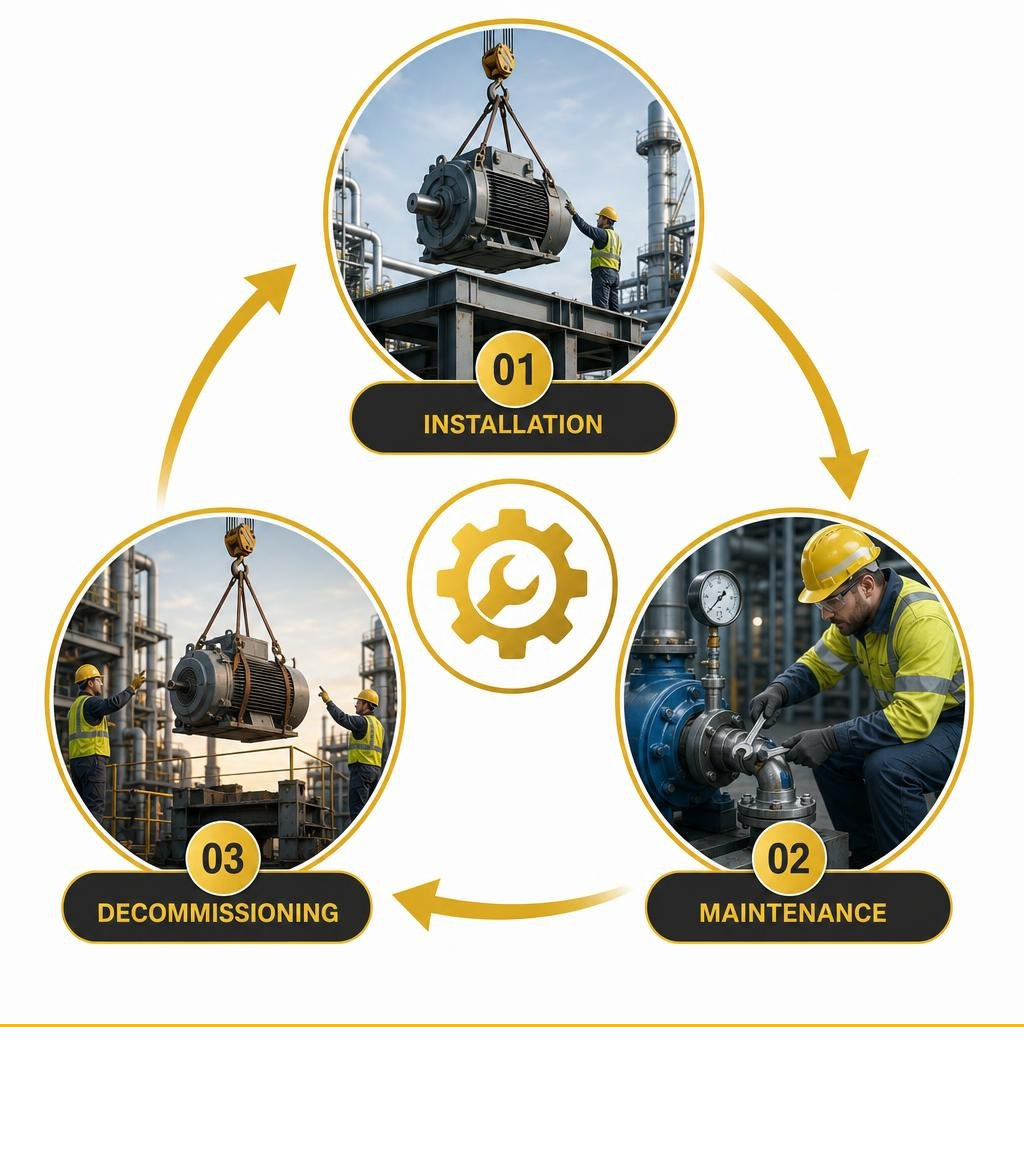
- Millwrights handle the full lifecycle of industrial machinery, from first installation through ongoing maintenance to decommissioning
- They work across heavy industries including power generation, food and beverage processing, paper and pulp, mining, and manufacturing
- Their work combines mechanical, hydraulic, pneumatic, and rigging skills in a single trade
- Precision is non-negotiable. Misalignment or improper installation directly causes unplanned downtime and equipment failure
For plant managers, the stakes are high. A millwright who doesn’t execute to spec isn’t just an inconvenience. It’s a safety hazard, a production loss, and a budget problem all at once.
The trade has roots going back centuries, but the modern millwright is a precision technician operating in some of the most demanding industrial environments in the world. Understanding what they do, and what separates a qualified millwright from an underqualified one, matters before you put one in your facility.
Key Takeaways
- Precision execution is critical. Modern millwrights align heavy machinery to within one thousandth of an inch to prevent catastrophic failure.
- Hiring professional millwrights directly minimizes operational downtime during critical plant shutdowns.
- Millwrights are versatile craftsmen who combine rigging, welding, fluid power mechanics, and precision alignment into a single specialized trade.
- Safety compliance is a top priority. Expert millwrights adhere to strict OSHA guidelines and zero-energy lock-out/tag-out procedures.
- Choosing an experienced New England industrial contractor ensures projects are completed on time and under budget.
What Is a Millwright? The Evolution of an Essential Trade
To fully understand millwright work today, it helps to look at where the trade started. Millwrighting is arguably one of the oldest engineering trades in human history.
Before the modern industrial era, the original millwrights were specialized carpenters. They designed, built, and maintained wooden watermills and wind-powered mills. These early craftsmen had to understand gear ratios, drive shafts, and fluid dynamics, all while carving massive gear mechanisms out of solid wood.
In the 19th century, legendary engineer Sir William Fairbairn noted that a traditional millwright’s abilities seemed virtually unlimited. These itinerant engineers could handle an axe, hammer, and plane with equal skill, working as carpenters, blacksmiths, and designers all at once.
The introduction of the steam engine changed everything. As wood gave way to iron and steel, the trade underwent a massive transition.
By 1919, industrial writers like James F. Hobart lamented that the ancient type of wood-working millwright had passed away. In their place arose a highly specialized mechanical craftsman. Modern millwrights traded their woodworking planes for micrometers, dial indicators, and laser alignment systems.
Today, millwrights are precision metalworkers. They handle massive, multi-ton machines but work within tolerances as tight as 1/1000th of an inch. While the materials have changed from wood to steel, the core mission remains the same: keeping the gears of industry turning smoothly.
Core Duties: What Does a Modern Millwright Do?
When you look at the daily schedule of an industrial site, you might wonder: What does a millwright do on a typical shift? The short answer is that they manage the entire lifecycle of industrial machinery.
Their core responsibilities include:
- Unloading and receiving: Inspecting and taking charge of unassembled heavy machinery from the moment it arrives at the project site.
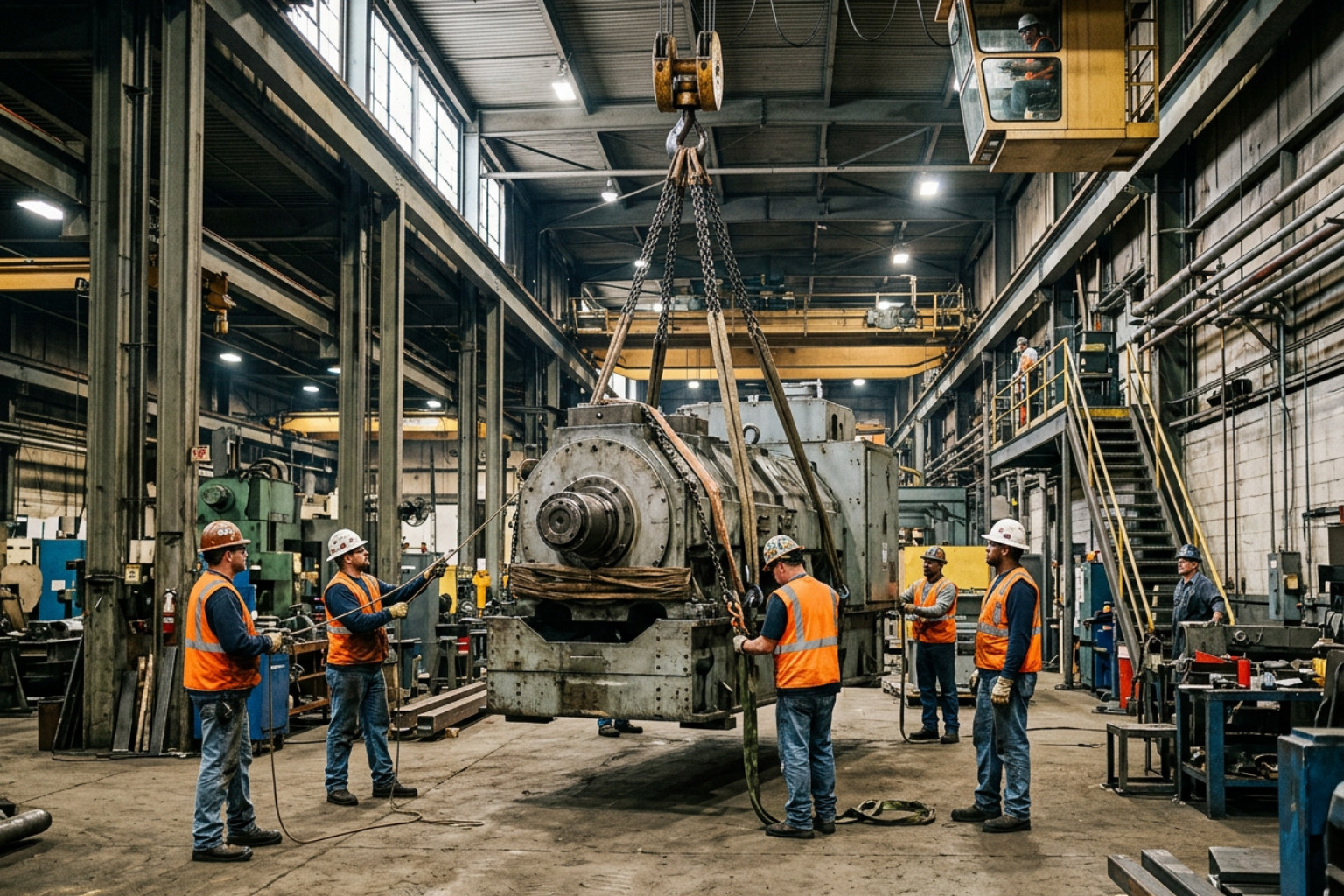
- Rigging and hoisting: Using cranes, hoists, gantry systems, jacks, and dollies to lift, transport, and place heavy industrial components.
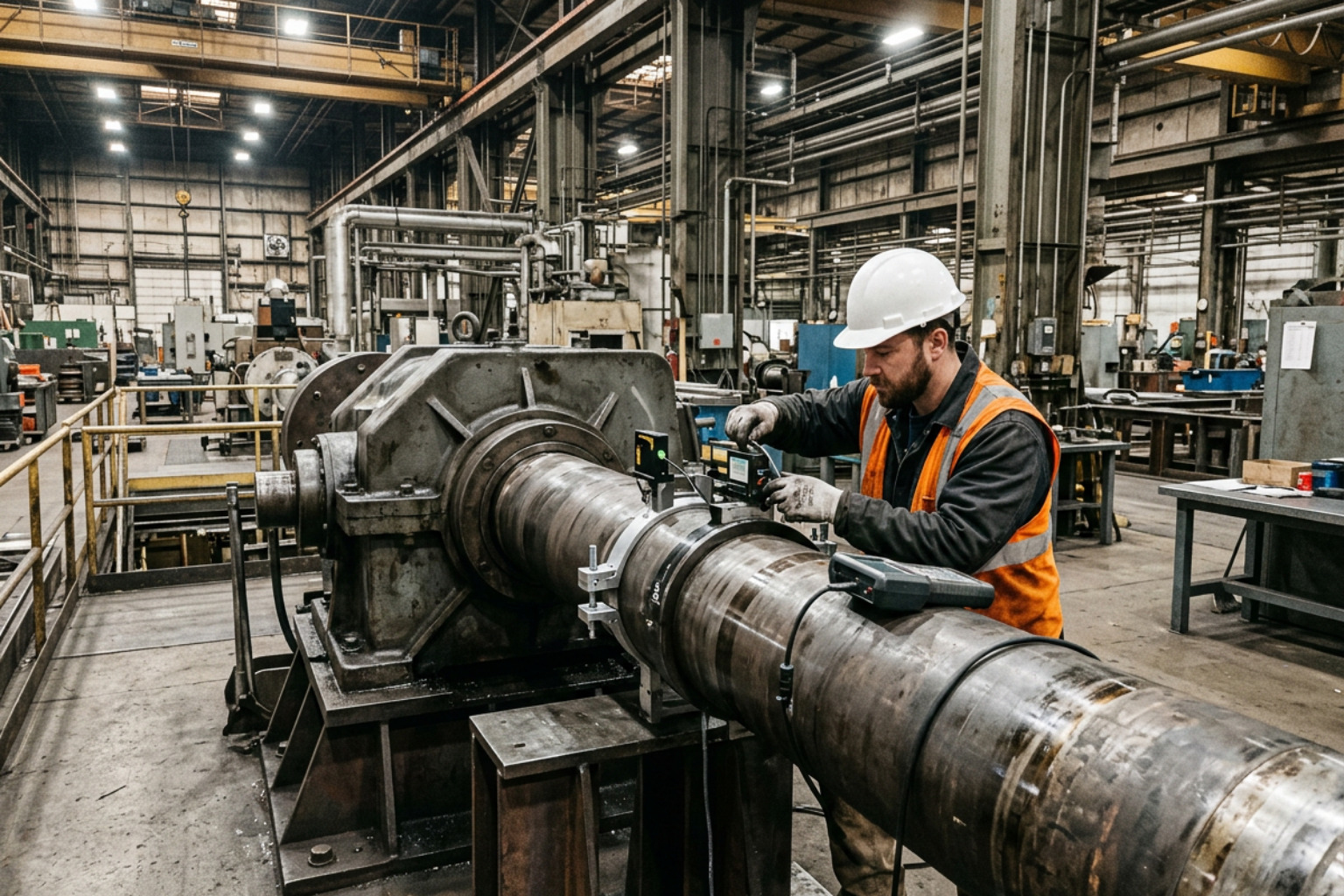
- Precision alignment: Utilizing laser alignment tools, dial indicators, and transits to align shafts, gears, and couplings to exact specifications.
- Routine and predictive maintenance: Performing vibration analysis, thermal imaging, and fluid checks to identify and fix minor mechanical issues before they cause a plant shutdown.
- Troubleshooting and repair: Diagnosing mechanical, hydraulic, and pneumatic system failures and fabricating custom replacement parts on-site when necessary.
Understanding What Is a Millwright in Heavy Industry
In heavy manufacturing, millwrights are the backbone of Industrial Construction and facility maintenance. They operate in highly diverse and challenging environments.
In the food and beverage industry, they install and service complex conveyor systems, high-speed packaging lines, and stainless steel processing equipment while maintaining strict sanitation standards.
In the paper and pulp sector, millwrights work on massive rollers, steam dryers, and heavy-duty pumps that operate under extreme pressure and heat.
In power generation facilities, they perform highly critical lifts to fly, level, and balance massive turbines and rotors. These large-scale components must be set perfectly level to prevent catastrophic vibrations during operation.
The Technical Skills That Define What Is a Millwright
Modern millwrighting is far more than just using heavy wrenches. It is a highly technical discipline that requires a diverse blend of mental and physical skills.
First, millwrights must be experts at reading complex blueprints, schematic drawings, and engineering manuals. They use these documents to plan the exact layout and step-by-step assembly sequence of massive industrial systems.
Second, they must have a deep understanding of fluid power mechanics, including both hydraulics and pneumatics. This allows them to troubleshoot the high-pressure systems that power modern automated machinery.
Finally, millwrights prioritize Safety above all else. Because they work around heavy moving parts, high-voltage systems, and confined spaces, they must be experts in accident-prevention protocols. This includes strict adherence to OSHA guidelines, personal protective equipment rules, and zero-energy lock-out/tag-out procedures.
Millwright vs. Industrial Mechanic: Key Differences
It is common for people to confuse millwrights with industrial mechanics or machinists. While these trades often work side-by-side in manufacturing facilities, they have distinct roles, training, and areas of expertise.
An industrial mechanic focuses primarily on the daily maintenance, troubleshooting, and repair of individual machines that are already in place. They are the go-to professionals when an operating machine breaks down on the production line.
A millwright, on the other hand, specializes in the big picture. They are responsible for assembling, rigging, placing, and setting up entire industrial systems from scratch. If a factory is installing a brand-new production line, a millwright handles the structural layout, heavy rigging, and precision leveling.
A machinist is a specialist who operates precision machine tools like lathes and milling machines. Their primary job is to fabricate or modify metal parts to highly specific dimensions, often working inside a controlled machine shop environment.
When a facility requires major machinery upgrades, working with an experienced Industrial Construction Company ensures that the right specialists are deployed for each phase of the project.
| Feature | Millwright | Industrial Mechanic | Machinist |
|---|---|---|---|
| Primary Focus | Assembling, rigging, and installing entire industrial systems | Repairing and maintaining existing machinery | Fabricating custom replacement metal parts |
| Key Tools | Laser alignment tools, cranes, hoists, dial indicators | Hand tools, diagnostic meters, grease guns | Lathes, milling machines, CNC equipment |
| Work Environment | Construction sites, factories, power plants, outdoors | Factory floors, indoor manufacturing plants | Machine shops, controlled indoor environments |
| Specialty Skill | Heavy rigging and precision shaft alignment | Mechanical troubleshooting and parts replacement | Precision metal cutting and fabrication |
The Real-World Process: How Millwrights Execute a Project
A successful machinery installation or relocation does not happen by accident. Professional millwrights follow a highly structured, logical process to ensure every project is executed safely, on time, and within budget.
This systematic approach is what defines professional Services in the industrial contracting sector.
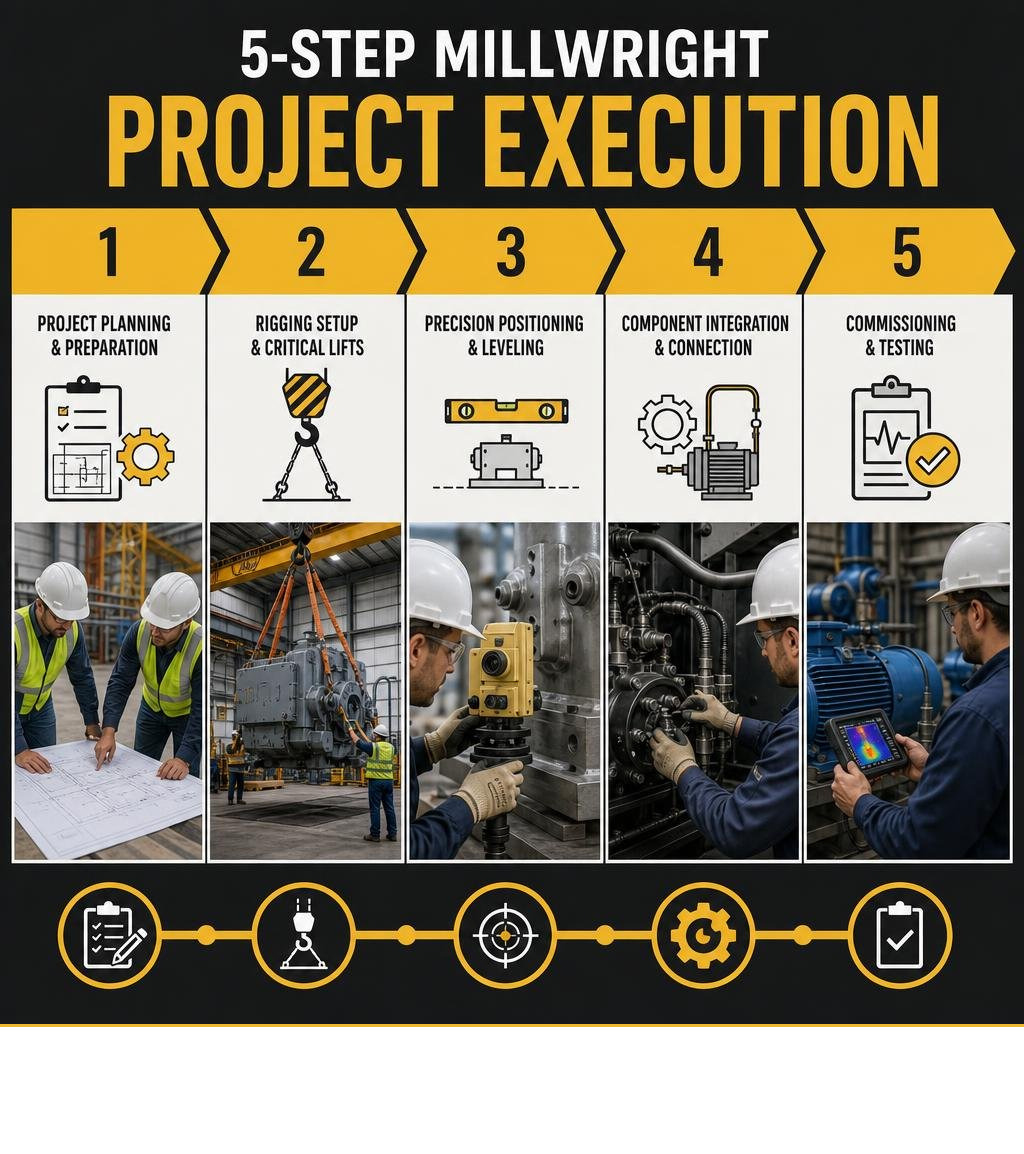
1. Project Planning and Preparation
Before any heavy equipment is moved, millwrights carefully study engineering blueprints and structural layout designs. They inspect the facility floor, confirm load-bearing capacities, and prepare the foundation using wood, concrete, and steel.
2. Rigging Setup and Critical Lifts
Once the site is prepared, the rigging crew sets up specialized hoisting equipment. They calculate weights, identify center-of-gravity points, and select the correct slings, shackles, and gantry cranes to execute critical lifts safely.
3. Precision Positioning and Leveling
After the machine is lifted into place, millwrights use precision leveling tools, plumb bobs, and optical transits to position the equipment. They align shafts and couplings to precise tolerances, often using metal shims for micro-adjustments.
4. Component Integration and Connection
With the main structure leveled, millwrights fit bearings, align gears, attach motors, and connect hydraulic and pneumatic lines. They ensure all auxiliary systems are perfectly integrated with the main machine.
5. Commissioning and Testing
Before handing the machinery over to the operations team, millwrights perform operational testing. They use vibration analysis and thermal imaging to verify that the system runs smoothly without overheating or excessive movement.
Project Risks: What Goes Wrong Without Professional Millwrights?
Attempting to install or move heavy industrial machinery without qualified millwrights is a recipe for disaster. The physical and financial risks of poor execution are incredibly high.
One of the most common issues is mechanical misalignment. If a drive shaft is out of line by even a fraction of a millimeter, it creates excessive friction and heat. Over time, this leads to catastrophic bearing failure, broken couplings, and ruined gearboxes.
These mechanical failures result in extended, unplanned operational downtime. For a heavy manufacturing facility, a single day of lost production can cost tens of thousands of dollars.
Furthermore, improper rigging and installation present severe safety hazards. A poorly secured load can slip during a lift, leading to dropped machinery, extensive facility damage, and life-threatening injuries to workers on the ground.
Reviewing past industrial Projects highlights how proper planning and professional execution prevent these costly mistakes.
Frequently Asked Questions About Millwrights
Do all millwrights have to weld?
While welding is not the primary definition of the trade, it is an incredibly important skill for modern millwrights. It is rare to find an industrial job posting that does not require welding proficiency. Millwrights frequently use welding and metal fabrication to construct sturdy machinery foundations, build custom brackets, and repair worn structural components on-site.
How long does a millwright apprenticeship take?
A standard millwright apprenticeship typically takes four years to complete. This structured pathway requires approximately 8,000 hours of paid, on-the-job work experience under the direct supervision of a certified journeyperson, plus supplemental technical classroom instruction covering advanced mathematics, blueprint reading, hydraulics, and safety compliance.
Conclusion
A millwright is far more than an industrial mechanic. They are precision craftsmen, heavy rigging experts, and mechanical puzzle solvers who keep our most critical manufacturing and power systems running safely and efficiently.
For plant and facility managers across New England, protecting operational uptime is everything. When you are planning a complex machinery installation, a plant relocation, or a custom metal fabrication project, you need a partner who understands the high stakes of industrial contracting.
Atlantic Millwrights provides expert Millwright Services across Massachusetts, New Hampshire, Maine, and Rhode Island. With a strict commitment to accident-free work, on-time project execution, and 24/7 emergency support, they ensure your heavy machinery is installed safely and aligned to absolute precision.
If you are planning an upcoming industrial project and want to make sure it is executed safely and efficiently, working with an experienced regional rigging and installation team can make all the difference.