

-
Reliable Heavy Haul Trucking Guide
September 1, 2026
Key Takeaways Freight exceeding 80,000 pounds gross weight, 8.5 feet in width, 13.6 feet in height, or 53 feet in length requires specialized heavy haul permits. Matching cargo dimensions to trailer types like RGNs, step decks, or multi-axle lowboys keeps loads legally compliant and safe during transport. Route surveys and permit processing usually take 3 to 5 business days across Massachusetts, New Hampshire, Maine, Rhode Island, and Vermont. Experienced riggers must coordinate ground loading, securement, and offloading to prevent structural cargo damage or facility delays.
Read More

-
A Comprehensive Guide to Pipe Fitting Types
Pipe Fitting Types That Keep Industrial Systems Moving Pipe fitting covers both the skilled trade of building industrial piping systems and the components that connect, route, reduce, branch, or close a pipe run, including elbows, tees, reducers, couplings, and flanges. Selecting the wrong fitting creates leaks, corrosion, safety hazards, and unplanned downtime. Proper component choice depends on pipe material, nominal size, wall schedule, operating pressure, fluid medium, and joining method. For plant leaders, every fitting directly impacts overall system reliability, maintenance access,
Read More
-
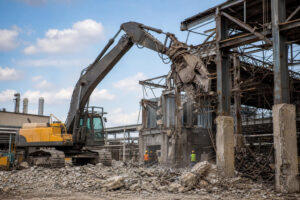
Find Reliable Industrial Demolition Contractors: A Practical Guide
August 4, 2026
Why Choosing the Wrong Industrial Demolition Contractor Is a Costly Mistake Industrial demolition is not the same as knocking down a house or gutting a retail space. You are dealing with reinforced concrete, embedded structural steel, live utility systems, decades-old hazardous materials, and equipment that was never designed to be removed easily. Get the contractor selection wrong and you are looking at safety violations, project delays, environmental fines, and unplanned downtime that can cost far more than the demolition itself. Here is what you need to know before hi
Read More
-
What is a Millwright? | Explained by the Pros
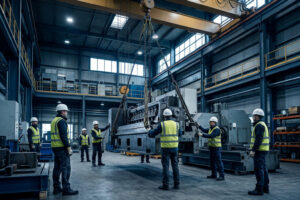
The Trade Keeping Heavy Industry Running: What Is a Millwright? What is a millwright? It's one of the most important questions a plant manager can ask before a machinery installation, retrofit, or emergency repair. A millwright is a highly skilled tradesperson who installs, aligns, maintains, repairs, and dismantles heavy industrial machinery and mechanical equipment, working to precision tolerances measured in thousandths of an inch. At a glance: Millwrights handle the full lifecycle of industrial machinery, from first installation through ong
Read More
-
Heavy Lift Rigging: What It Takes to Move the Loads Standard Equipment Can’t
July 17, 2026
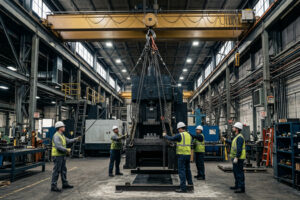
What is Heavy Lift Rigging? Heavy lift rigging is the specialized process of planning, engineering, and executing lifts that exceed the capacity of standard rigging operations. It typically applies to lifts requiring a formal engineered lift plan because of weight, complexity, or risk. Quick answer: What is heavy lift rigging? Factor Detail Definition Lifting and moving loads too large or complex for standard rigging methods Common threshold Loads exceeding 75% of a crane's rated capacity, or requiring specialized equipment, are widely treated as critical lifts un
Read More
-
The Ultimate Guide to Industrial Warehouse Equipment Movers
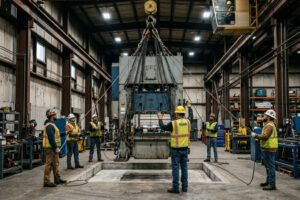
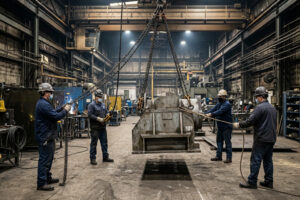
When One Wrong Move Costs You Days of Production Industrial warehouse equipment movers are specialized contractors who handle the safe disassembly, transport, and reinstallation of heavy machinery, production lines, and warehouse systems, the kind of work a standard moving company simply cannot do. If you need to relocate industrial equipment, here is what to know upfront: Who to hire: A licensed industrial mover or millwright contractor with proven rigging, transport, and reassembly experience What they handle: CNC machines, conveyor systems, robotic arms, presses, racking syst
Read More
-
The Ultimate Guide to Hoisting & Rigging Safety
June 25, 2026
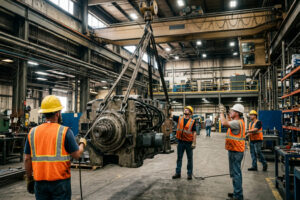
Why Hoisting & Rigging Safety Can Make or Break Your Operation Hoisting & rigging operations are at the center of some of the most high-risk work that happens inside heavy manufacturing facilities — and when something goes wrong, the consequences are severe. A dropped load. A tipped crane. A failed sling. These aren't hypotheticals. On November 14, 1992, a strap failed while lifting a tank, critically injuring a worker who died five days later. In a separate incident, a 22-ton concrete shielding block fell 25 feet, causing over $400,000 in damage — all because of im
Read More
-
A–Z Guide to Hoisting & Rigging Basics
Key Takeaways Hoisting and rigging operations are at the center of some of the most high-stakes work in heavy industry — and when something goes wrong, the consequences are severe. A dropped load, a snapped sling, or a crane contacting an overhead powerline can mean lost equipment, lost time, and lost lives. With approximately 125,000 cranes operating across the United States, and electrocution accounting for roughly 1 in 10 construction deaths, the risks are not theoretical. They happen on real job sites, often because of small, preventable errors — a miscalculated load we
Read More
-
A Practical Guide to Heavy Equipment Storage
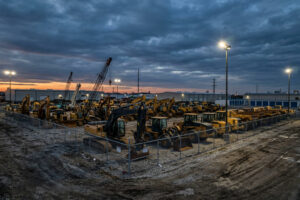
Why Heavy Equipment Storage Decisions Can Make or Break Your Operation Heavy equipment storage is one of the most underestimated cost centers in industrial and construction operations — and one of the most consequential. When machinery sits idle between projects, it doesn't stop costing you money. It ties up capital, creates security exposure, and deteriorates faster than most managers expect. Get the storage decision wrong, and you're looking at theft losses, weather damage, pest contamination, or equipment that won't start when you need it most. One industry account
Read More
-
The Highs and Lows of Warehouse High Bay Rack Rigging
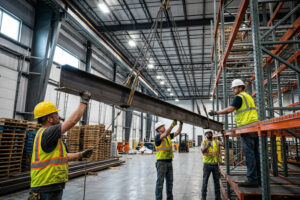
When Push-Back Rack Installation Goes Wrong, It's a Big Problem A warehouse push back rack is one of the most efficient high-density storage systems available — but installing one in a high-bay facility is where things get complicated fast. What is a warehouse push back rack? Here's the short version: Feature Detail Storage Method Pallets stored 2–6 deep per lane on nested carts Rail Type Inclined rails, gravity-assisted Inventory Rotation LIFO (Last In, First Out) Max Height 7.5 m (approx. 25 ft) Typical Depth 3–4 pallets (
Read More