May 23, 2026
Why Industrial Rigging and Warehousing in New England Demands Specialized Expertise
Industrial rigging warehouse New England operations are how regional manufacturers, power plants, and processing facilities move and store heavy assets without halting production or creating safety risks.
If you need a fast answer, here’s what you need to know:
| What You Need | What to Look For |
|---|---|
| Heavy machinery moving | Rigging crews with OSHA-compliant lift planning |
| Secure equipment storage | Indoor facilities with 24/7 monitoring |
| Oversized load transport | Licensed carriers familiar with Northeast road restrictions |
| Full-project coordination | Integrated rigging, warehousing, and millwright services |
| Cost estimate | Expect $2,000–$4,000+ per day depending on equipment and complexity |
New England’s industrial base — from food processing and chemical plants to power generation — runs on tight schedules. When a piece of critical equipment needs to be relocated, replaced, or staged during a shutdown, every hour of delay has a direct cost.
The challenge is that rigging and warehousing aren’t separate decisions here. A machine pulled from a facility needs somewhere safe to go — climate-controlled, monitored, and accessible — while the installation site is prepared. Without that coordination, equipment sits exposed, schedules slip, and costs climb.
This guide breaks down how integrated industrial rigging and warehousing works in New England, what separates reliable providers from risky ones, and what plant managers should evaluate before committing to a partner.
Key Takeaways
- Integrated rigging and warehousing minimize project delays and equipment exposure to the elements.
- Safety compliance (OSHA/ANSI) is non-negotiable for heavy industrial lifts and long-term storage.
- Specialized equipment like Versalifts and high-capacity hydraulic jacks are essential for precision in tight New England facilities.
- Strategic regional locations reduce transportation costs and simplify oversized load logistics.
- Proper site assessment and lift planning prevent the most common rigging failures and site accidents.
The Strategic Advantage of an Industrial Rigging Warehouse in New England
For facility managers in North Reading, MA, or the greater Boston area, the primary challenge of equipment relocation is often timing. A new production line might arrive before the floor is prepped, or a decommissioned boiler might need to be moved out before a scrap buyer can pick it up. This is where What Is Warehouse Services becomes a critical part of the logistics chain.
An industrial warehouse isn’t just a shed; it is a high-capacity facility designed to handle point loads that would crush a standard commercial floor. These facilities in the Northeast often provide over 100,000 square feet of indoor space combined with several acres of outdoor yard storage for less sensitive materials.
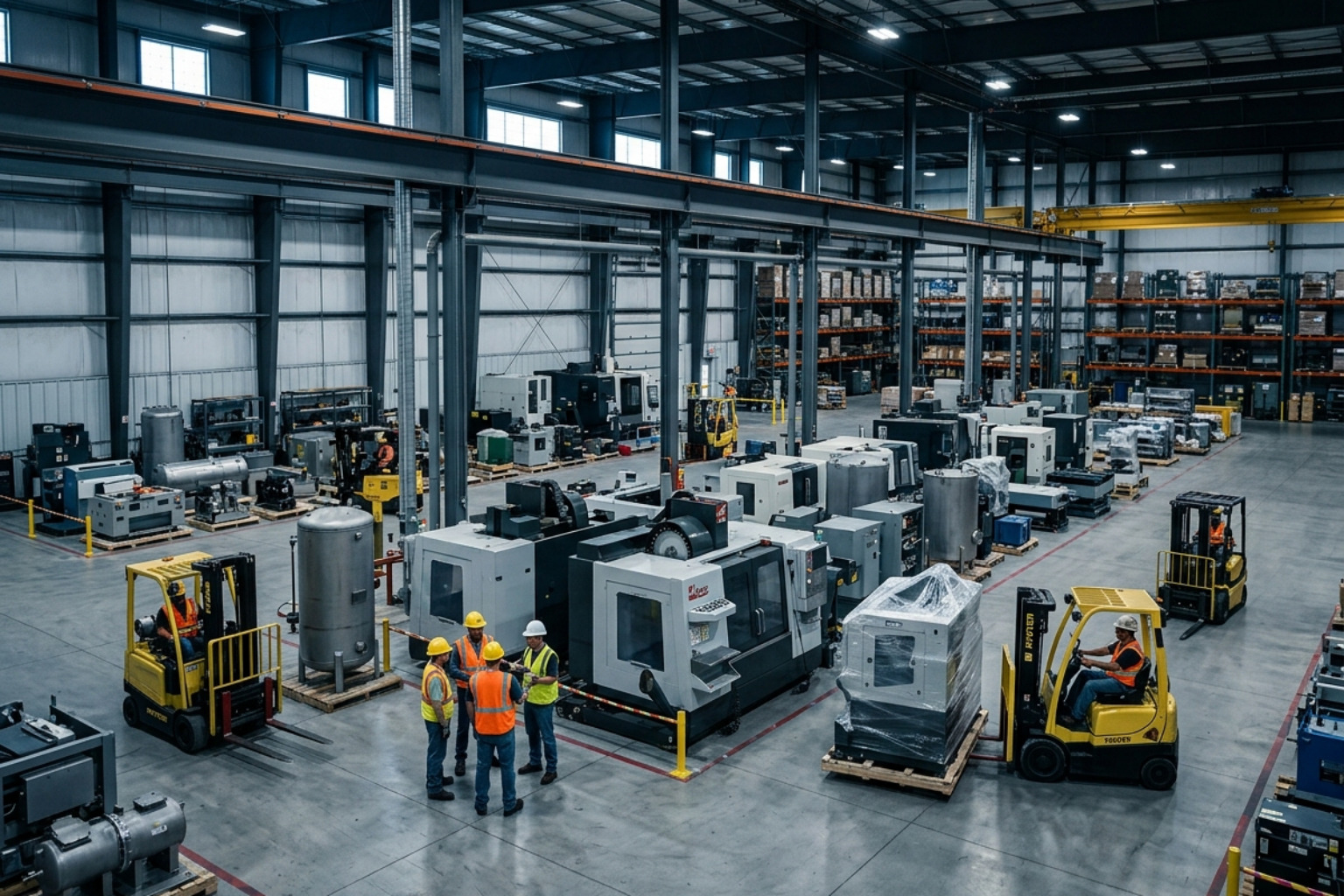
| Feature | Indoor Industrial Storage | Outdoor Yard Storage |
|---|---|---|
| Climate Control | Yes — prevents rust, moisture damage, and calibration drift | No |
| Security | 24/7 monitoring and restricted facility access | Fenced and monitored storage yards |
| Asset Type | Sensitive electronics, CNC machines, MRI magnets | Steel beams, tanks, and heavy casting components |
| Handling | Overhead cranes and high-capacity forklifts | All-terrain cranes and heavy-duty lifting equipment |
Specialized Equipment for Precision Operations
Moving heavy machinery in the compact, often historic industrial buildings of New England requires more than just raw power; it requires precision. Rigging Services providers must maintain a diverse fleet of specialized tools:
- Versalifts and High-Capacity Forklifts: These are the workhorses of the industry. Models like the 40/60 Versalift can handle up to 60,000 lbs while maintaining a small enough footprint to navigate tight factory aisles.
- Hydraulic Gantry Systems: When a ceiling is too low for a crane or the floor cannot support a massive forklift, hydraulic gantries can lift loads exceeding 1,000 tons with pinpoint accuracy.
- Air Skates and Spreader Bars: Air skates allow riggers to float multi-ton machines on a thin film of air, protecting sensitive epoxy floors. Spreader bars ensure that when a load is lifted, the force is distributed evenly to prevent structural bending.
Regional Logistics and Port Access
New England’s infrastructure is notoriously difficult for heavy hauling. Low bridges in Massachusetts, weight-restricted roads in New Hampshire, and tight urban corridors in Rhode Island require meticulous route planning.
A local industrial rigging warehouse New England partner acts as a vital staging ground. Equipment coming through East Coast ports can be drayed to a secure warehouse, offloaded, and then delivered to the final site using “just-in-time” logistics. This prevents expensive specialized trailers from sitting idle at a job site while waiting for a crane crew.
Essential Services for Heavy Machinery Relocation
Relocating a plant is not a single event; it is a series of coordinated technical maneuvers. Using Warehouse Services as a hub allows for a more organized decommissioning or installation process.
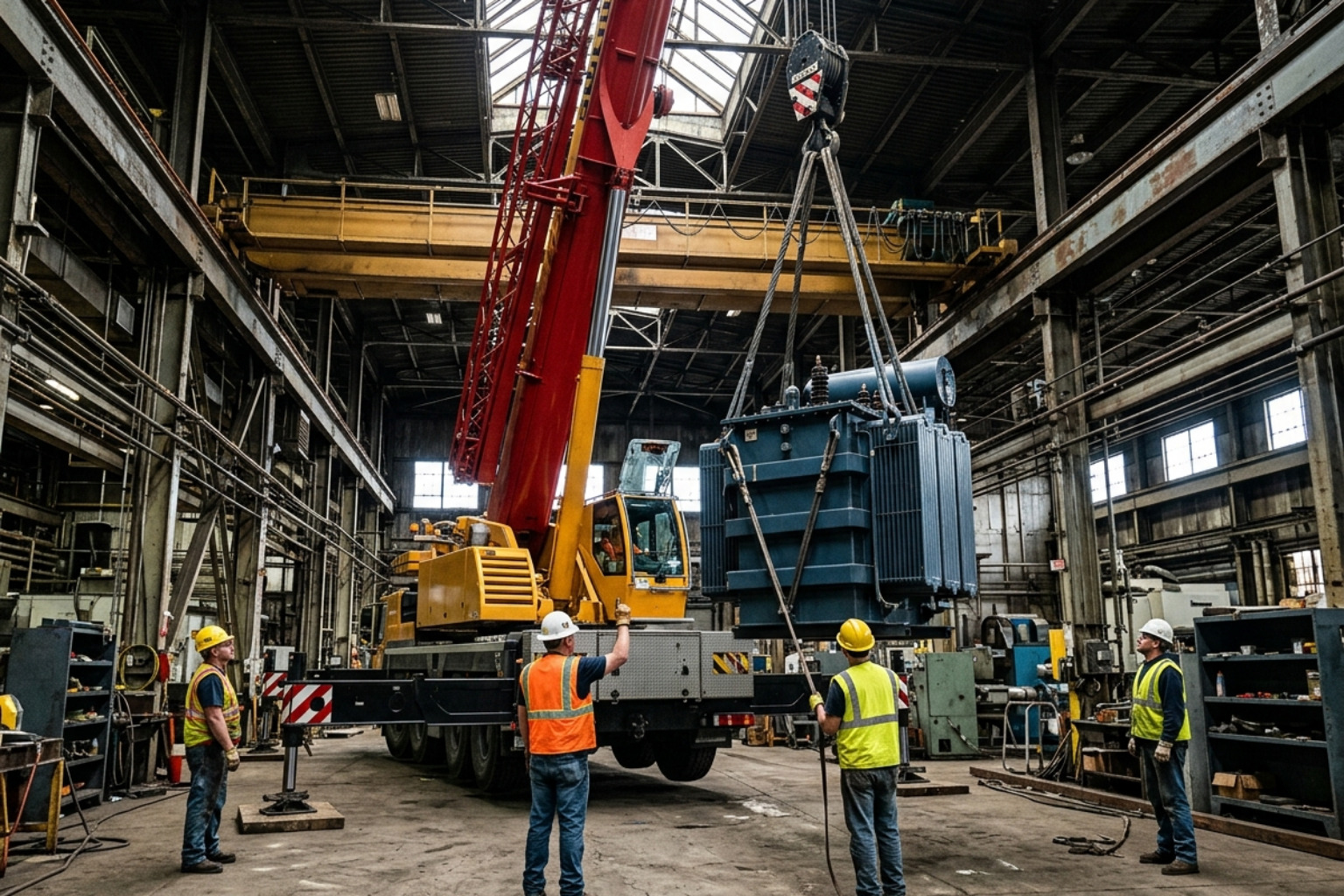
For many manufacturing setups, the process involves Heavy Equipment Movers For Warehouse And Manufacturing Setups who specialize in more than just moving. They handle the mechanical disassembly, custom crating for export, and the specialized transport of over-dimensional loads.
Logistics Coordination and Staging
- Route Planning: Professional riggers identify every height and weight restriction between the warehouse and the facility.
- Intermodal Transloading: This involves moving freight seamlessly between rail, ship, and truck, often requiring TSA-approved facilities for port-related trucking.
- Short-term Staging: Holding equipment in a secure, monitored environment ensures that if a site prep delay occurs, the machinery remains safe and out of the way of active construction.
The Rigging Process: From Assessment to Installation
In May 2026, the standard for a successful move is “zero impact” on surrounding operations. This is achieved through a structured six-step process:
- Initial Site Assessment: Riggers perform a detailed load calculation and path-of-travel review, checking floor capacities and door clearances.
- Lift Planning: Using simulation software, engineers develop a formal plan to identify potential failure points before a single chain is attached.
- Equipment Selection: The team matches the specific crane, hoist, or jack system to the unique dimensions and weight of the load.
- Secure Transport: Assets are moved to an industrial rigging warehouse New England facility for staging or delivered directly via air-ride trailers.
- Precision Leveling: Once at the destination, millwrights use laser alignment and precision levels to ensure the machine is perfectly positioned for operation.
- Mechanical Integration: Final assembly and system testing ensure the machine is ready for production immediately after the riggers depart.
Risks and Common Mistakes in Industrial Rigging
The stakes in industrial rigging are incredibly high. A single failed sling or an unbalanced load can result in millions of dollars in property damage or, worse, catastrophic injury. Many Common Mistakes When Hiring A Rigging Company stem from choosing a provider based solely on the lowest bid rather than technical competency.
Common risks include improper load balancing, which can cause a machine to tip during a lift, and inadequate equipment maintenance. Every piece of rigging gear—from shackles to slings—must be inspected before every use. Following Heavy Equipment Moving Safety Tips is the only way to maintain an accident-free job site.
How to Evaluate a Rigging Partner
When vetting a company for a project in Maine, Vermont, or Massachusetts, plant managers should look for specific indicators of quality:
- Safety Records: Ask for the company’s Experience Modification Rate (EMR). A rating below 1.0 indicates a safer-than-average workplace.
- Insurance Coverage: Industrial assets are expensive. Ensure the partner carries “Riggers Liability” insurance, which specifically covers the item being lifted (standard general liability often does not).
- Operator Certifications: Verify that all crane operators and riggers are certified by recognized bodies like the NCCCO and that they follow OSHA and ANSI standards.
- Experience: Look for a partner with a long history in the region. Companies with decades of experience, such as those operating since the mid-20th century, have a deep understanding of local regulations and infrastructure.
For more detail on this process, see How To Choose Industrial Rigging Services.
Frequently Asked Questions about New England Rigging
What is the difference between millwrighting and rigging?
While the terms are often used together, they refer to different skill sets. Rigging is the art and science of lifting and moving heavy objects safely. Millwrighting involves the precision assembly, alignment, and repair of the machinery once it has been moved. Most high-end projects require both. You can learn more here: What Is Rigging Service.
How much do industrial rigging services cost in New England?
Costs vary based on the complexity of the lift, the equipment required (e.g., a 500-ton crane vs. a forklift), and the size of the crew. In the current 2026 market, daily rates in Massachusetts typically range from $2,000 to $4,000, though large-scale plant relocations are bid on a project basis. For a deeper breakdown, see Rigging Services Cost In Massachusetts.
Why is climate-controlled warehousing necessary for machinery?
New England is famous for its humidity and rapid temperature swings. For precision manufacturing equipment, these fluctuations cause “sweating” on metal surfaces, leading to flash rust. Furthermore, sensitive electronics can suffer from moisture ingress, and precision-ground components may expand or contract, throwing off factory calibrations before the machine is even turned on.
Conclusion
Navigating the complexities of an industrial rigging warehouse New England project requires a partner that blends technical rigging skill with robust logistical support. From the initial site assessment to the final mechanical integration, every step must be handled with a focus on minimizing downtime and maximizing safety.
Atlantic Millwrights provides the specialized equipment—including high-capacity Versalifts and hydraulic jacks—and the secure, 24/7 monitored warehousing necessary to protect your most valuable industrial assets. Whether you are moving a single transformer or relocating an entire production facility across state lines, professional coordination is the key to an on-time, under-budget execution.
If you are looking for the Best Heavy Equipment Movers For You, ensure they have the regional presence and safety record to back up their claims. Partner with an experienced New England rigging team to ensure your next project is completed safely and on schedule.