August 4, 2026
Why Choosing the Wrong Industrial Demolition Contractor Is a Costly Mistake
Industrial demolition is not the same as knocking down a house or gutting a retail space. You are dealing with reinforced concrete, embedded structural steel, live utility systems, decades-old hazardous materials, and equipment that was never designed to be removed easily.
Get the contractor selection wrong and you are looking at safety violations, project delays, environmental fines, and unplanned downtime that can cost far more than the demolition itself.
Here is what you need to know before hiring an industrial demolition contractor:
- Industrial demolition covers factories, power plants, refineries, steel mills, and warehouses
- It requires specialized crews trained in hazardous materials, heavy structural removal, and utility isolation
- Asset recovery from scrap metal and surplus equipment can offset a significant portion of project costs
- Permitting, asbestos abatement, and utility disconnects typically add 4 to 8 weeks before physical work begins
- Safety planning must start before any equipment moves on site, not after
The right contractor brings engineering expertise, a clean safety record, and a clear process from initial assessment through to final site clearance. The wrong one brings risk.
Key Takeaways
- Safety is the primary metric of success. Look for contractors with a proven safety record and low incident rates.
- Asset recovery is a critical cost-saving tool. Salvaging non-ferrous metals and industrial surplus can directly offset structural teardown expenses.
- Environmental regulations in New England are stringent. Proper hazardous material surveys and abatement are legal prerequisites.
- Operational continuity requires specialized planning. Selective demolition allows surrounding plant wings to remain fully active.
- Proper planning prevents project delays. Permitting, utility coordination, and engineering reviews take longer than the physical demolition.
What Sets Industrial Demolition Apart from Standard Demolition?
Standard commercial or residential demolition typically focuses on clearing space with basic machinery. The structures are usually straightforward, constructed of wood, light steel, or standard brick.
In contrast, industrial demolition deals with highly complex, heavy-duty environments. These structures are built with massive structural steel beams, thick reinforced concrete foundations, and heavy machinery that is often integrated directly into the building’s load-bearing design.
Additionally, industrial facilities often house active, complex utility networks. High-voltage electrical lines, high-pressure steam pipes, chemical lines, and specialized processing systems require surgical precision to isolate and decommission.
Understanding the structural differences is key to planning a safe project. For more details on heavy industrial builds, you can read our guide on What Is Industrial Construction?
| Feature | Standard Commercial Demolition | Industrial Demolition |
|---|---|---|
| Primary Materials | Wood, drywall, light steel, brick | Reinforced concrete, heavy structural steel, specialized alloys |
| Environmental Hazards | Minimal (primarily localized asbestos or lead paint) | High (PCBs, heavy metals, chemical residues, industrial waste) |
| Utility Complexity | Standard municipal water, gas, and power lines | High-pressure piping, chemical lines, high-voltage substations |
| Asset Recovery | Limited to basic scrap metal | High-value industrial machinery, non-ferrous piping, electrical gear |
| Operational Impact | Usually requires full site closure | Often executed selectively within active manufacturing environments |
Key Services in the Decommissioning and Dismantling Process
A successful project requires a suite of specialized Industrial Demolition Services tailored to the needs of the facility. Whether a plant manager needs to clear a single production line or level an entire multi-building manufacturing campus, the process must be carefully categorized.
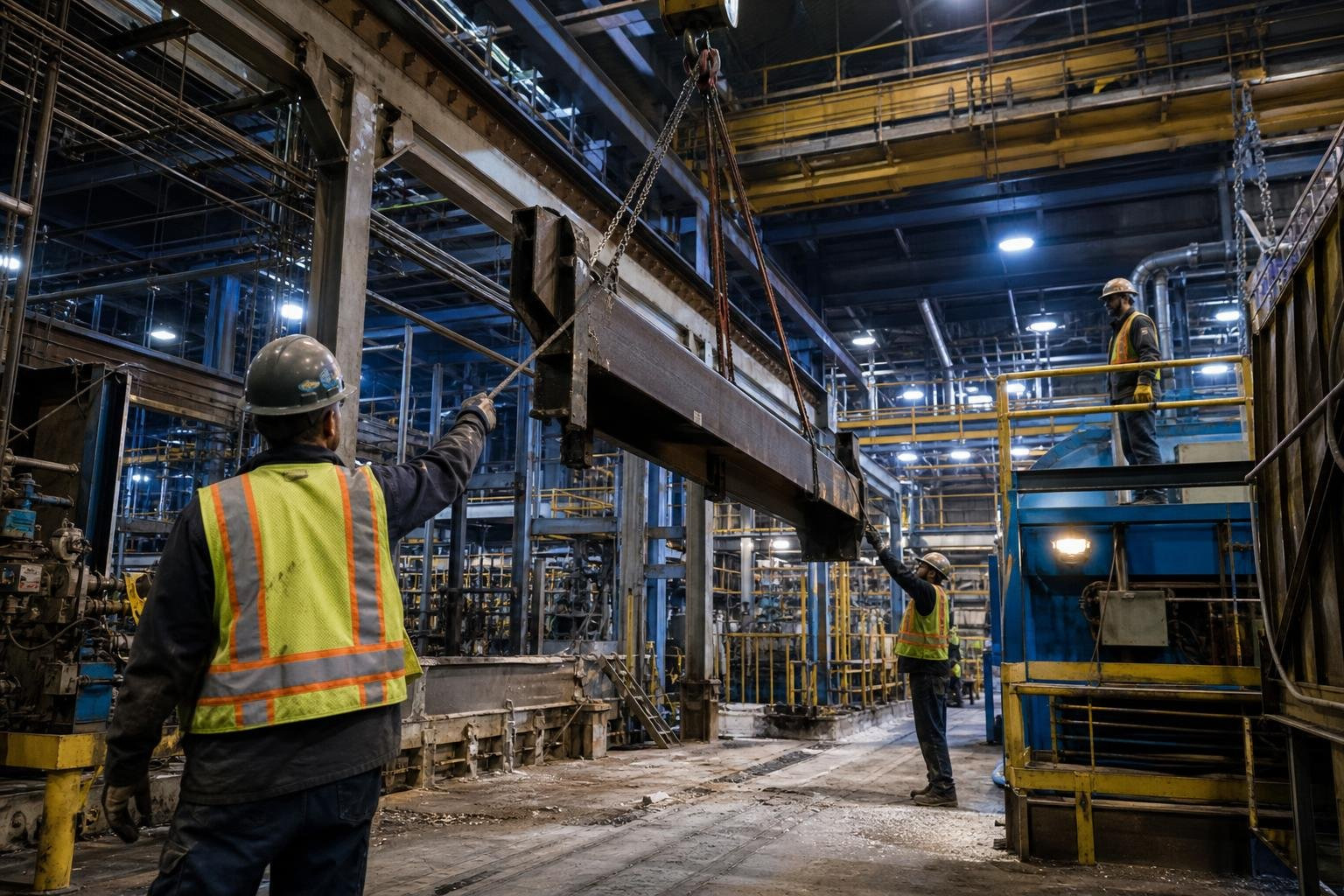
Core Services in Industrial Demolition
Industrial projects generally fall into several core service areas:
- Plant Decommissioning: The systematic shutdown, decontamination, and preparation of an industrial facility prior to physical dismantling.
- Selective Demolition: The surgical removal of specific interior structures, process lines, or building sections while leaving adjacent operations completely untouched.
- Total Building Demolition: The complete structural teardown of a facility from the roof down to the concrete slab.
- Concrete Infrastructure Demolition: Breaking down heavy concrete foundations, deep equipment slabs, and structural support pillars using specialized hydraulic breakers.
- Interior Strip-Outs: Removing interior walls, electrical systems, and mechanical infrastructure to prepare a building shell for modernization or repurposing.
When dealing with complex mechanical setups, services like selective demolition often require specialized support for disconnecting and removing high-pressure Piping / Pipe Fitting systems safely.
Asset Recovery and Scrap Value Offsets
One of the most significant advantages of industrial-scale demolition is the potential for investment recovery. Industrial facilities are packed with high-value materials that can be salvaged, recycled, or sold as surplus.
- Non-Ferrous Metals: Copper wiring, brass fittings, and aluminum components command premium prices on the scrap market, alongside high-value alloys, including stainless steel.
- Surplus Equipment: Heavy machinery, industrial boilers, electrical generators, and large transformers can often be refurbished and sold rather than scrapped.
- Structural Steel: Large steel beams can be processed and recycled efficiently, reducing overall waste disposal fees.
By working with experienced Heavy Equipment Movers for Warehouse and Manufacturing Setups, facilities can carefully extract these valuable assets without damaging them, directly offsetting the total cost of the project.
The Step-by-Step Industrial Demolition Process
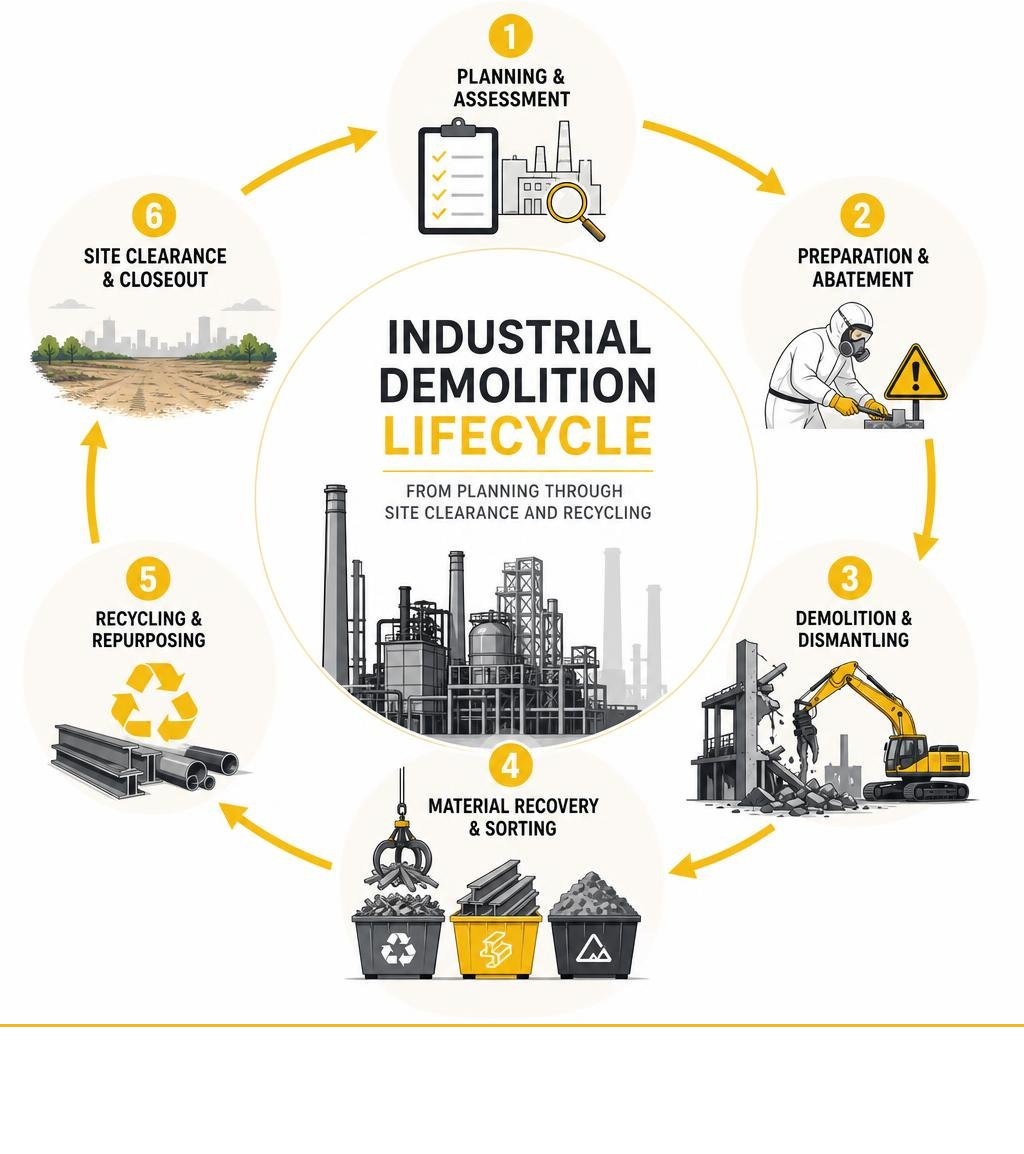
Executing an industrial teardown requires a highly structured sequence to ensure safety, regulatory compliance, and budget control.
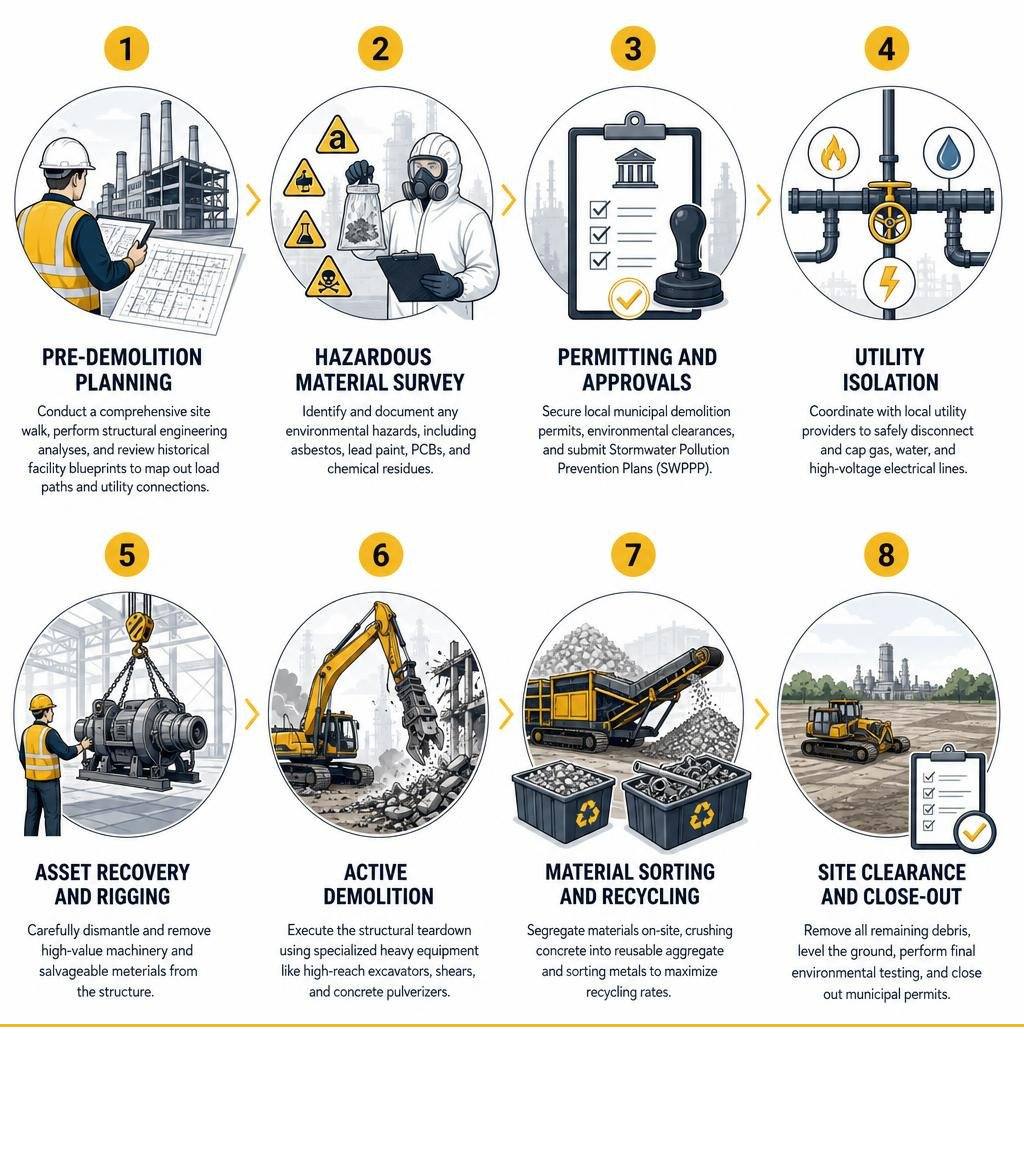
- Pre-Demolition Planning: Conduct a comprehensive site walk, perform structural engineering analyses, and review historical facility blueprints to map out load paths and utility connections. This stage should also define the demolition sequence, equipment access points, exclusion zones, staging areas, and shutdown requirements so every trade understands how the work will progress before crews mobilize.
- Hazardous Material Survey: Identify and document any environmental hazards, including asbestos, lead paint, PCBs, and chemical residues. Industrial buildings often contain hidden hazards in insulation, flooring, pipe coatings, tanks, transformers, and process equipment, so certified inspectors should complete sampling and reporting before any cutting, stripping, or structural removal begins.
- Permitting and Approvals: Secure local municipal demolition permits, environmental clearances, and submit Stormwater Pollution Prevention Plans (SWPPP). Depending on the site, this may also involve fire department coordination, traffic control approvals, waste disposal documentation, and state environmental notifications that must be completed before physical demolition can start.
- Utility Isolation: Coordinate with local utility providers to safely disconnect and cap gas, water, and high-voltage electrical lines. For active or partially occupied facilities, contractors also need to trace undocumented lines, lock out and tag out energy sources, verify zero-energy conditions, and protect any utilities that must remain in service for nearby operations.
- Asset Recovery and Rigging: Carefully dismantle and remove high-value machinery and salvageable materials from the structure. This step can include rigging out production equipment, transformers, pumps, conveyors, copper wiring, stainless piping, and structural steel in a controlled sequence so reusable assets are protected and scrap value can help offset project costs.
- Active Demolition: Execute the structural teardown using specialized heavy equipment like high-reach excavators, shears, and concrete pulverizers. Crews should follow the engineered demolition plan, working in a controlled top-down or sectional sequence while monitoring dust, vibration, falling debris, adjacent structures, and changing load conditions throughout the work.
- Material Sorting and Recycling: Segregate materials on-site, crushing concrete into reusable aggregate and sorting metals to maximize recycling rates. Effective sorting reduces landfill costs, keeps regulated materials out of the general waste stream, and allows ferrous metals, non-ferrous metals, concrete, brick, and equipment components to be processed through the right recycling or disposal channels.
- Site Clearance and Close-Out: Remove all remaining debris, level the ground, perform final environmental testing, and close out municipal permits. The close-out phase should leave the owner with disposal records, recycling documentation, inspection signoffs, and a clean, stable site that is ready for redevelopment, new equipment installation, or transfer to the next contractor.
To ensure your team is fully prepared for the initial phases of this process, review our guide on How to Prepare Your Facility for a Rigging or Machinery Moving Project.
Critical Risks and Common Mistakes in Industrial Projects
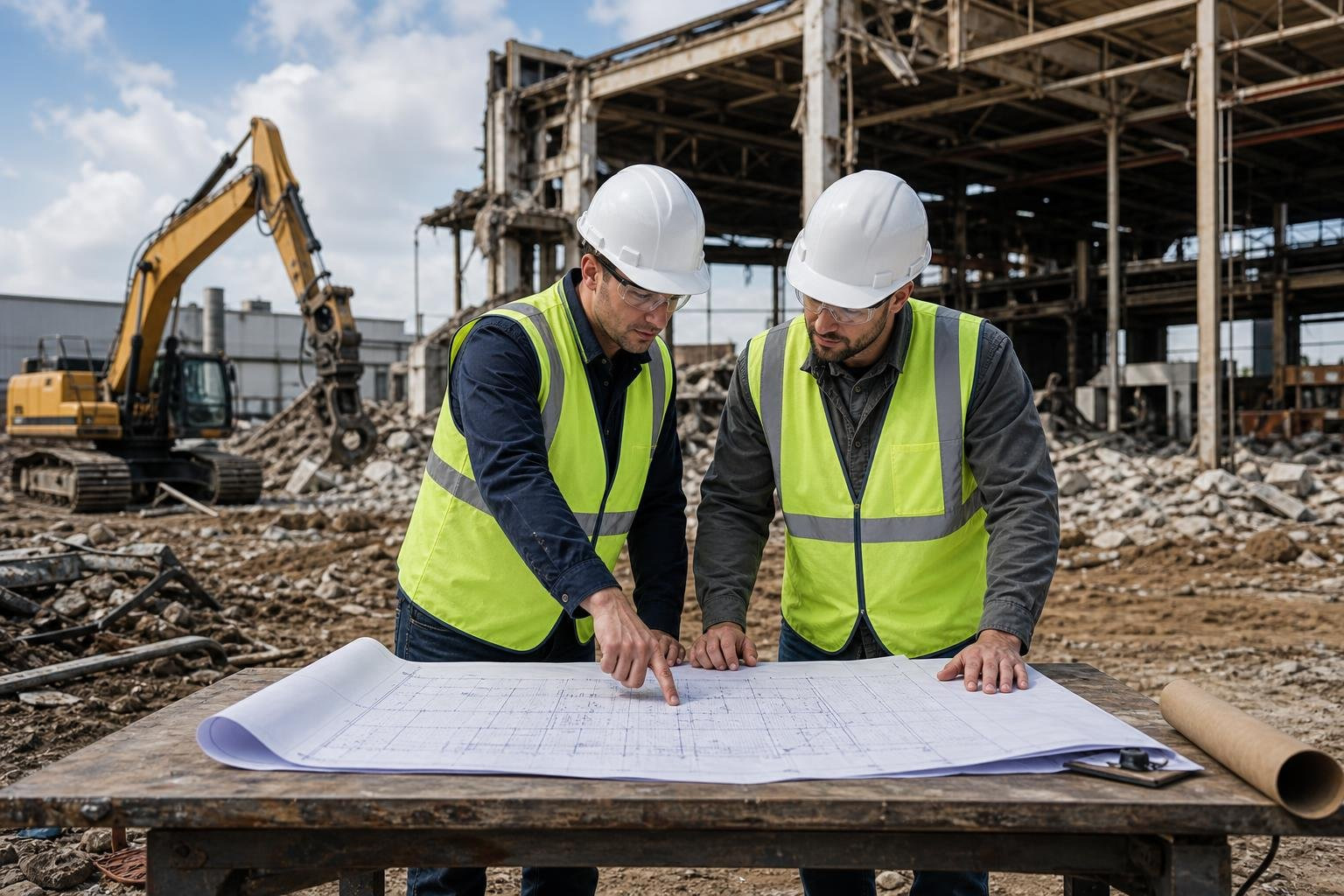
Industrial projects carry inherent risks that can quickly derail budgets and timelines if not properly managed.
One of the most common mistakes is failing to account for undocumented utility runs. Over decades of operation, many industrial plants undergo minor retrofits and pipe rerouting that never make it onto the official blueprints. Striking an active chemical or electrical line due to poor pre-planning is a catastrophic error.
Another major risk is inadequate environmental planning. Failing to identify hazardous materials early can lead to heavy state and federal fines, immediate job site shutdowns, and severe health risks for workers.
Prioritizing safety from day one is the only way to mitigate these liabilities. You can learn more about our commitment to zero-accident job sites by visiting About AMI / Safety.
Environmental Compliance and Hazardous Materials
Industrial sites in New England must adhere to strict environmental standards. Managing hazardous materials requires certified specialists to handle:
- Asbestos Abatement: Safely isolating and removing thermal insulation, transit pipes, and roofing materials containing asbestos.
- Lead Paint Mitigation: Controlling dust and debris when cutting or dismantling structural steel coated in legacy lead-based paints.
- PCB Remediation: Properly handling and disposing of older transformers, capacitors, and heavy electrical gear that may contain toxic polychlorinated biphenyls.
- Soil Contamination Prevention: Implementing runoff barriers and active dust suppression to prevent contaminants from entering local groundwater or stormwater systems.
Safety Standards and Accident Prevention
A premier industrial contractor maintains a culture of safety through active, daily protocols:
- Daily Toolbox Talks: Reviewing the specific tasks, structural risks, and safety expectations with the crew before work begins each morning.
- OSHA Compliance: Ensuring every worker on site is fully trained and holds the necessary certifications for heavy equipment operation and hazardous material handling.
- Dust and Air Quality Control: Deploying misting systems and negative air machines to keep airborne particulates within safe limits.
- Spill Prevention: Setting up containment zones around heavy machinery and hydraulic equipment to prevent fluid leaks from contaminating the site.
For a deeper look at safe handling practices on active job sites, read A Quick Start Guide to Safe Rigging and Lifting.
Selecting the Right Partner for Your Project
Choosing the right contractor is the single most important decision a facility manager will make. The ideal partner does not just tear down walls, they manage risk, navigate local New England regulations, and protect your operational uptime.
When evaluating potential partners, look for a team that understands how to integrate demolition with mechanical retrofitting and asset relocation. For insights on what to look for, check out our guide on How to Choose Industrial Rigging Services.
Key Qualifications for an Industrial Demolition Contractor
Before signing a contract, verify that the company possesses these essential qualifications:
- A Proven Safety Record: Ask for their Experience Modification Rate (EMR) and check for any history of OSHA violations or safety stop-work notices.
- An In-House Equipment Fleet: Contractors who own their heavy machinery, excavators, and rigging gear can mobilize faster and avoid third-party rental delays.
- New England Regional Experience: Local knowledge of municipal permits, individual state environmental laws, and winter weather logistics is invaluable.
- Comprehensive Industrial Capabilities: Ensure the team has deep expertise in millwrighting and mechanical systems. Understanding how a building was put together is essential to taking it apart safely.
To understand how these mechanical skills translate to safer, more precise dismantling, read our overview on What Does a Millwright Do?.
Frequently Asked Questions About Industrial Demolition
Can demolition occur while parts of a facility remain operational?
Yes. Through selective dismantling and the installation of heavy-duty isolation barriers, contractors can safely demolish targeted sections of a plant while adjacent production lines remain fully active. This requires careful coordination, dust containment, and vibration monitoring to prevent disruption.
For facilities planning partial shutdowns or upgrades, utilizing professional Plant Outage Support is highly recommended to keep the rest of your operations running smoothly.
How long does a typical industrial demolition project take?
While the active demolition of a mid-sized warehouse or plant wing may only take 2 to 6 weeks on site, the entire project lifecycle is longer. Permitting, hazardous material abatement, and utility coordination typically add 4 to 8 weeks of preparation time before heavy machinery can mobilize.
For a realistic breakdown of industrial project schedules, see How Long Do Rigging Projects Take?.
Conclusion
Industrial demolition is a highly technical engineering challenge that demands precision, strict environmental compliance, and an uncompromising commitment to safety. Whether you are clearing out a single production line or decommissioning an entire manufacturing plant, the success of your project hinges on the expertise of your contracting partner.
Atlantic Millwrights provides expert industrial contracting, custom fabrication, and specialized rigging services across New England, including Massachusetts, New Hampshire, Maine, and Rhode Island. With a focus on minimizing operational downtime and maintaining a clean safety record, the team ensures your facility transitions smoothly to its next phase of productivity.
If you are planning an upcoming project and want to ensure it is executed safely, on time, and within budget, explore our specialized Industrial Demolition Services or reach out to our team today to discuss your site’s specific needs.