May 23, 2026
When Moving a Machine Wrong Costs You $25,000 an Hour
Rigging heavy machinery in a warehouse is not a job you can hand off to a general moving crew and hope for the best.
One miscalculated lift. One ignored floor load rating. One unbalanced multi-ton load shifting mid-move. Any of these can shut down your line, damage a six-figure machine, or put workers in serious danger.
The financial stakes are real: unplanned downtime costs manufacturers between $10,000 and $25,000 per hour. A poorly planned rigging job does not just risk the equipment — it risks your entire production schedule.
Here is what safe, professional warehouse machinery rigging looks like at a glance:
| Step | What It Involves |
|---|---|
| Site Assessment | Floor load ratings, clearances, travel paths, and pinch points |
| Pre-Move Prep | Lockout/tagout, fluid drains, axis locks, and component removal |
| Rigging and Lift | Engineered lift plan, correct slings, spreader bars, and gantries |
| Transport | Machine skates, air casters, or Versa-Lifts depending on space |
| Final Installation | Precision leveling, laser alignment, and torque checks |
Whether you are relocating a single press or reconfiguring an entire production line, the process demands certified riggers, proper equipment, and a plan built around your facility — not a generic checklist.
This guide breaks down every part of the process so you know exactly what to expect, what to ask for, and what separates a safe, efficient move from a costly one.
Key Takeaways
- Rigging is a specialized engineering science focused on load distribution and mechanical advantage.
- Professional services minimize production downtime through phased relocation strategies.
- Compliance with OSHA lockout/tagout (LOTO) standards is critical for preventing injuries.
- Modern machinery requires precision alignment within ±0.005 inches for operational integrity.
- Specialized equipment like Versa-Lifts and air casters protect warehouse floors and high-value assets.
What is Rigging and Why It Matters for Warehouses
To the untrained eye, moving a machine looks like a simple matter of strength. In reality, What is Rigging Service? It is the specialized craft of securing, lifting, and maneuvering heavy loads using mechanical advantage. While standard movers might handle pallets or office furniture, riggers deal with multi-ton assets that have offset centers of gravity and delicate internal components.
In a warehouse environment, rigging is about more than just getting an object from Point A to Point B. It involves complex load calculations to ensure that the weight is distributed correctly across slings, shackles, and the facility floor itself. Without this level of precision, you risk structural damage to your building or catastrophic equipment failure.
The Difference Between Standard Moving and Industrial Rigging
Standard moving relies on manual labor and basic equipment like pallet jacks. Industrial rigging is an engineering discipline. When rigging heavy machinery warehouse projects, teams must account for:
- Center of Gravity: Many industrial machines are top-heavy or lopsided. A 20,000-lb unbalanced load presents a lethal hazard if not rigged with the correct spreader bars.
- Structural Integrity: Riggers identify OEM lift points to ensure the machine’s frame isn’t warped during the lift.
- Mechanical Advantage: Using pulleys, gantries, and levers to move weights that exceed the capacity of standard forklifts.
Understanding Everything You Need to Know About Industrial Rigging and Moving helps facility managers realize that specialized tools are non-negotiable for high-value assets.
Why Professional Rigging is Essential for Manufacturing
Manufacturing facilities in New England, from food processing plants to paper mills, operate on tight margins. Professional Industrial Rigging and Moving Services for Manufacturing Facilities provide three main benefits:
- Downtime Reduction: Experienced teams work around your production schedule, including weekends and holidays, to keep the line moving.
- Asset Protection: Professional riggers use air-ride trailers and custom crating to prevent vibration damage to sensitive electronics.
- Insurance Compliance: Most general business insurance policies will not cover a dropped load unless it was handled by certified rigging specialists.
Essential Tools for Rigging Heavy Machinery Warehouse
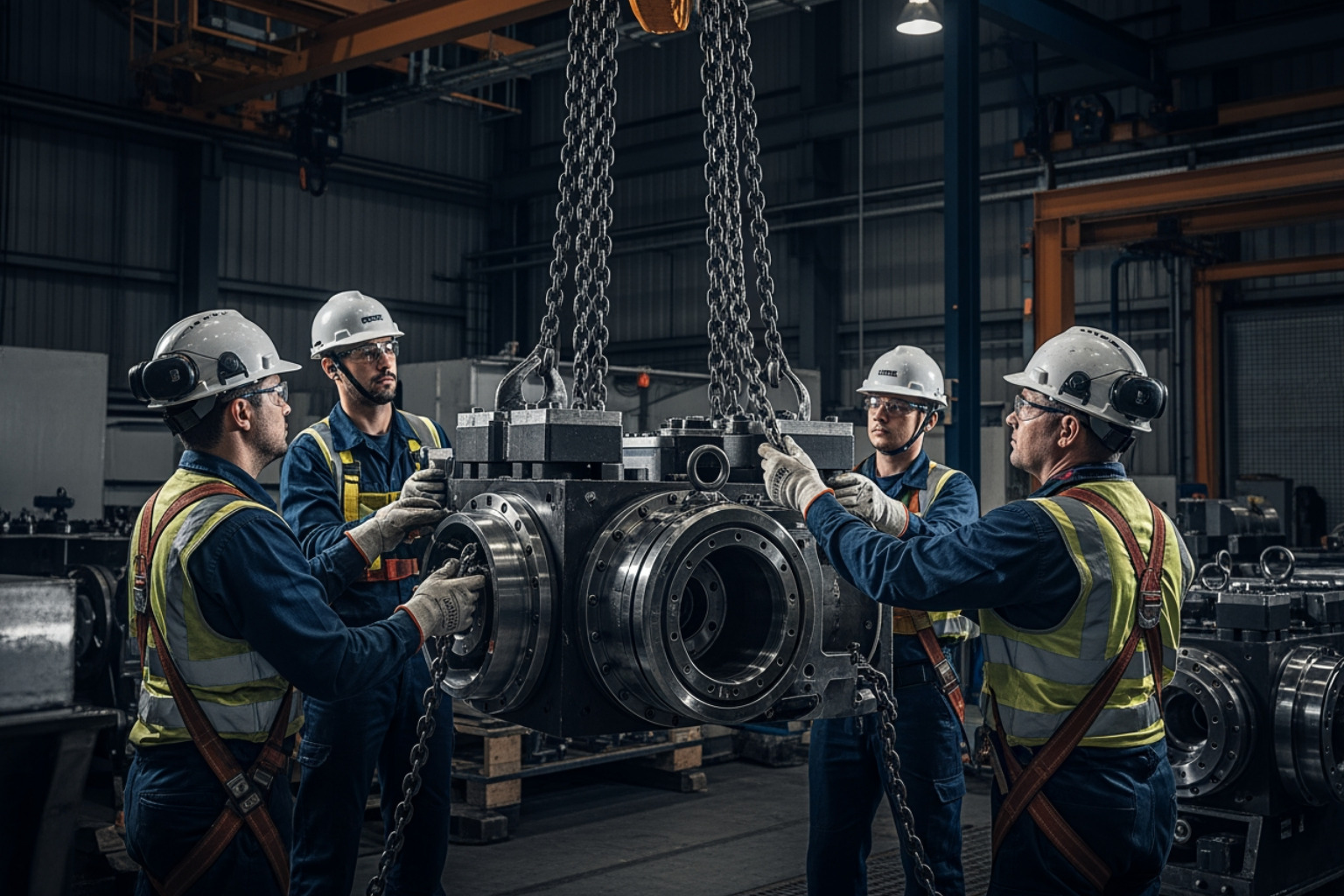
Using the right tool for the job is the difference between a smooth afternoon and a multi-day disaster. Standard forklifts are often too bulky for narrow warehouse aisles. Instead, specialized equipment is used to navigate tight spaces.
Specialized Lifting Equipment for Tight Spaces
When space is at a premium, riggers utilize:
- Versa-Lifts: These specialized forklifts can handle up to 60,000 lbs while maintaining a compact footprint, making them ideal for navigating narrow aisles.
- Air Casters: These systems use a thin film of compressed air to “float” loads from 500 lbs to thousands of tons. They allow for 360-degree movement with zero floor damage.
- Toe Jacks: These allow for lifting heavy equipment with very low ground clearance, providing a starting point for Heavy Equipment Movers for Warehouse and Manufacturing Setups to place skates underneath.
- Low-Headroom Trolleys: These are essential when overhead clearance is limited, maximizing the lifting height within existing building constraints. For more on these systems, see the KBK system with low-headroom trolley | Demag .
Transportation and Securing Tools
Once the machine is off its foundation, it needs to stay secure. Rigging Services include:
- Air-Ride Trailers: These trailers use air suspension to cushion the load against road shocks during transport across Massachusetts or New Hampshire.
- Custom Crating: For sensitive CNC machines or medical equipment, custom wooden crates with internal blocking and vapor barriers prevent moisture damage and shifting.
- Machine Skates: These heavy-duty rollers allow multi-ton assets to be pushed across concrete floors without leaving a scratch.
The Step-by-Step Process of Rigging Heavy Machinery Warehouse
A successful move starts long before the equipment arrives on site. Atlantic Millwrights follows a systematic approach to ensure every project stays on time and under budget.
Pre-Move Planning and Site Assessment
The first step is a comprehensive site walk-through. This isn’t just a visual check; it’s a technical evaluation.
- Clearance Measurements: Verifying that the machine will fit through every door, around every corner, and under every overhead pipe.
- Floor Load Verification: Ensuring the concrete slab can handle the concentrated weight of the machine and the rigging equipment simultaneously.
- Utility Disconnection: Coordinating the lockout/tagout of electrical, pneumatic, and hydraulic lines.
- Travel Path Mapping: Identifying pinch points and ensuring the path is clear of debris or other production activities.
This level of detail is a core part of our Warehouse Services and is essential for anyone learning How to Prepare Your Facility for a Rigging or Machinery Moving Project.
Execution and Precision Millwrighting
After the move, the work isn’t done. The machine must be returned to operational status. This is where millwrighting expertise comes in.
- Laser Alignment: Modern CNC machines demand positioning accuracy within ±0.005 inches. We use laser systems to ensure the machine is perfectly squared.
- Anchoring and Leveling: Using precision levels and torque-checked anchors to prevent vibration that can lead to premature wear.
- Fluid Restoration: Refilling reservoirs and checking for leaks before the initial startup.
Safety Standards for Rigging Heavy Machinery Warehouse
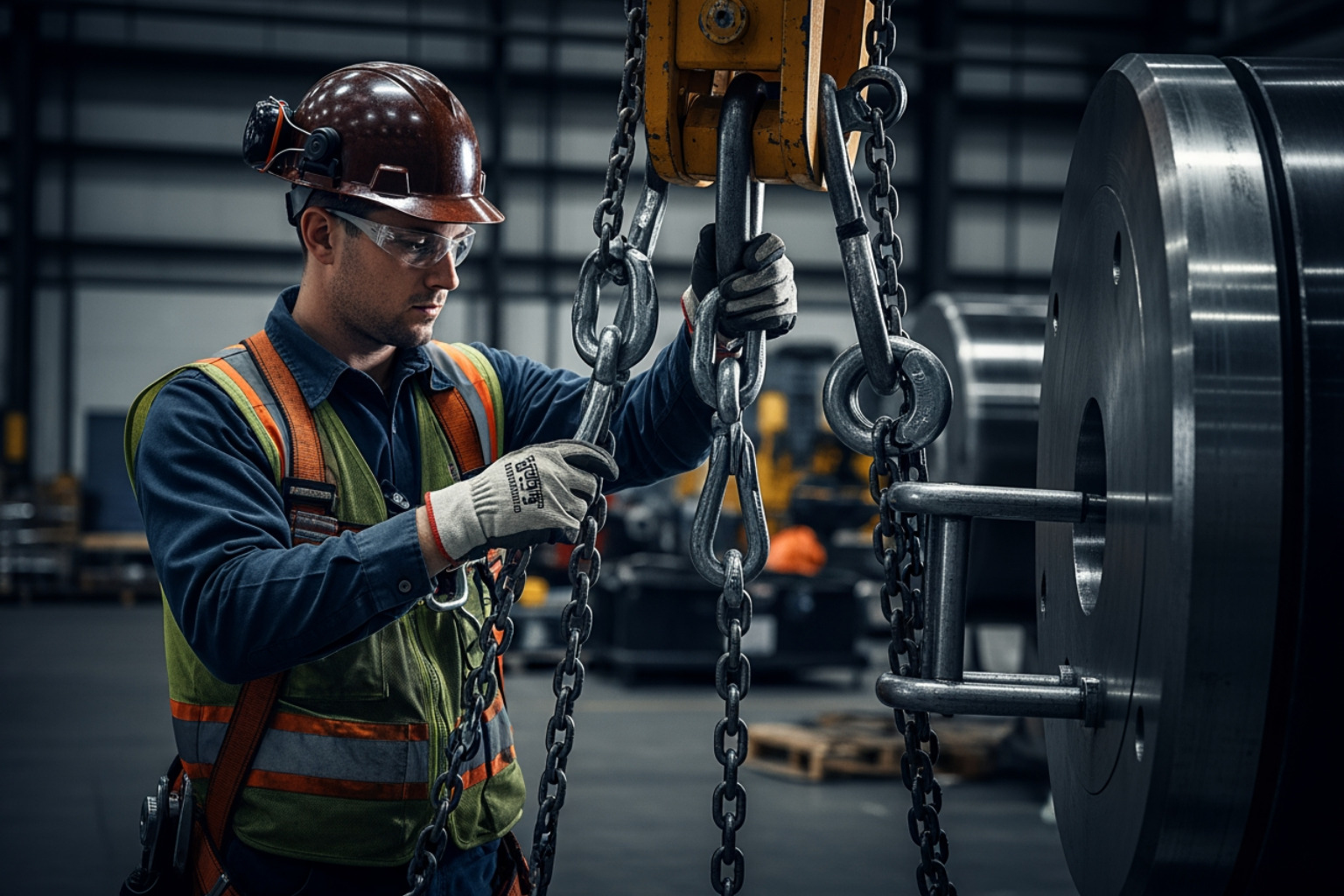
Safety is the highest priority in any industrial environment. As of May 2026, OSHA standards remain strict, and for good reason. Compliance prevents an estimated 120 fatalities and 50,000 injuries annually across the U.S. manufacturing sector.
Managing Lockout/Tagout (LOTO) Compliance
OSHA’s lockout/tagout standard (29 CFR 1910.147) is consistently among the top 10 most frequently cited violations. Before rigging heavy machinery warehouse assets, all energy sources must be neutralized.
- Energy Isolation: This includes electrical, mechanical, hydraulic, and even gravity-fed energy.
- Verification: Riggers must verify that the machine cannot be started accidentally while it is being disassembled or moved.
- Documentation: Keeping clear records of who placed locks and when they can be removed.
Following A Quick Start Guide to Safe Rigging and Lifting ensures that your facility remains accident-free.
Risk Mitigation in Active Facilities
Moving heavy equipment while the rest of the plant is running requires intense coordination.
- Traffic Management: Setting up barriers to keep pedestrians and other forklift traffic away from the rigging zone.
- EHS Coordination: Working closely with your Environmental, Health, and Safety leads to follow internal facility protocols.
- Signal Person Certification: Ensuring that every lift is guided by a certified professional using standardized hand signals to overcome the noise of an active warehouse.
Common Risks and How to Avoid Them
Even with the best tools, things can go wrong if the planning is flawed. Awareness of Common Mistakes When Hiring a Rigging Company can save you from a major liability.
Challenges of Tight Spaces and Multi-Level Facilities
Many older New England facilities have unique architectural challenges.
- Roof Openings: Sometimes the only way to get a large tank or silo into a building is through the roof using a 600-ton gantry or crane.
- Sub-Basements: Rigging equipment into or out of sub-basements requires specialized hoisting systems and structural shoring.
- Multi-Level Sync: Using synchronized hoists to move long components, like brake looms, between floors without bending the frame.
Handling Oversized or Irregularly Shaped Loads
Not every machine is a perfect cube.
- Offset Centers of Gravity: If a machine is lopsided, riggers use adjustable spreader bars to ensure the lift remains level.
- Custom Tie-Downs: For oversized loads on flatbed trucks, calculating the exact tie-down points is critical to prevent the load from shifting during transit.
- Route Studies: Before moving an oversized load through a warehouse, riggers must conduct a “dry run” to identify any overhead obstructions or tight turns that could cause a hang-up.
Frequently Asked Questions
How do rigging services minimize production downtime?
Professional rigging companies use phased relocation plans. Instead of shutting down the entire plant, we move one line or section at a time. By scheduling work during off-shifts, weekends, or holidays, we ensure that your production targets are met while the facility is being upgraded or relocated.
What certifications should I look for in a rigging company?
You should verify that the company follows OSHA 29 CFR 1910.184 for sling safety and ASME B30 standards for lifting equipment. Operators should be NCCCO certified, and the company should have a documented history of accident-free work. Atlantic Millwrights prides itself on maintaining a rigorous safety record across all projects in Maine, Vermont, and beyond.
Why is precision leveling necessary after a move?
Precision leveling is about more than just making the machine look straight. Modern industrial equipment relies on tight tolerances. If a machine is unlevel by even a fraction of an inch, it can cause internal friction, vibration, and premature failure of bearings or spindles. Accuracy within ±0.005 inches is the standard for ensuring the machine produces high-quality parts from day one.
Conclusion
Rigging heavy machinery warehouse projects is a high-stakes endeavor that requires a blend of engineering, specialized equipment, and a deep commitment to safety. Atlantic Millwrights provides comprehensive rigging and relocation services across New England, specializing in the installation, repair, and retrofitting of complex mechanical systems.
With our 24/7 service availability, we focus on minimizing your downtime and delivering on-time, under-budget results. Whether you are in North Reading, Boston, or anywhere in the New Hampshire and Rhode Island area, our team is equipped to handle your most challenging industrial moves.
If you are planning a complex machinery move and require a partner who prioritizes precision and safety, working with an experienced team ensures your project stays on schedule. Contact our expert rigging team today to discuss your facility’s needs.